
No, a prolapse is not usually a sign of cancer. Pelvic organ prolapse occurs when weakened pelvic muscles allow organs like the uterus, bladder, or rectum to drop or bulge into the vaginal area. It is most often caused by childbirth, aging, or hormonal changes not cancer.
Pelvic organ prolapse is a structural condition, meaning it happens due to loss of support in the pelvic floor muscles and connective tissues. Common causes include vaginal childbirth, menopause (due to reduced estrogen), chronic coughing, heavy lifting, or obesity. These factors gradually weaken the support system, leading to a bulge or pressure sensation.
Cancer, on the other hand, is a cellular disease involving abnormal and uncontrolled cell growth. Conditions like cervical cancer or uterine cancer develop differently and do not directly cause prolapse. However, the confusion arises because some symptoms may overlap.
Symptoms of Prolapse vs Cancer
Pelvic Organ Prolapse Symptoms:
- Feeling of heaviness or pressure in the pelvis
- A visible or felt bulge in the vaginal area
- Discomfort during standing or physical activity
- Urinary leakage or difficulty emptying the bladder
Possible Cancer Warning Signs:
- Unusual or postmenopausal bleeding
- Persistent pelvic or abdominal pain
- Unexplained weight loss
- Abnormal discharge
When to Be Concerned
While prolapse itself is not cancerous, you should seek medical evaluation if you notice:
- Sudden or rapidly worsening symptoms
- Bleeding not related to your menstrual cycle
- Pain that doesn’t improve
- Any unusual changes in your body
A doctor may perform a pelvic exam, Pap smear, ultrasound, or biopsy to rule out serious conditions.
Can Prolapse and Cancer Occur Together?
In rare cases, a person can have both a prolapse and a cancer at the same time, but one does not cause the other. For example, someone with long-term prolapse may still develop a separate condition like endometrial cancer, but they are independent issues.
Key Connections Between Prolapse and Cancer
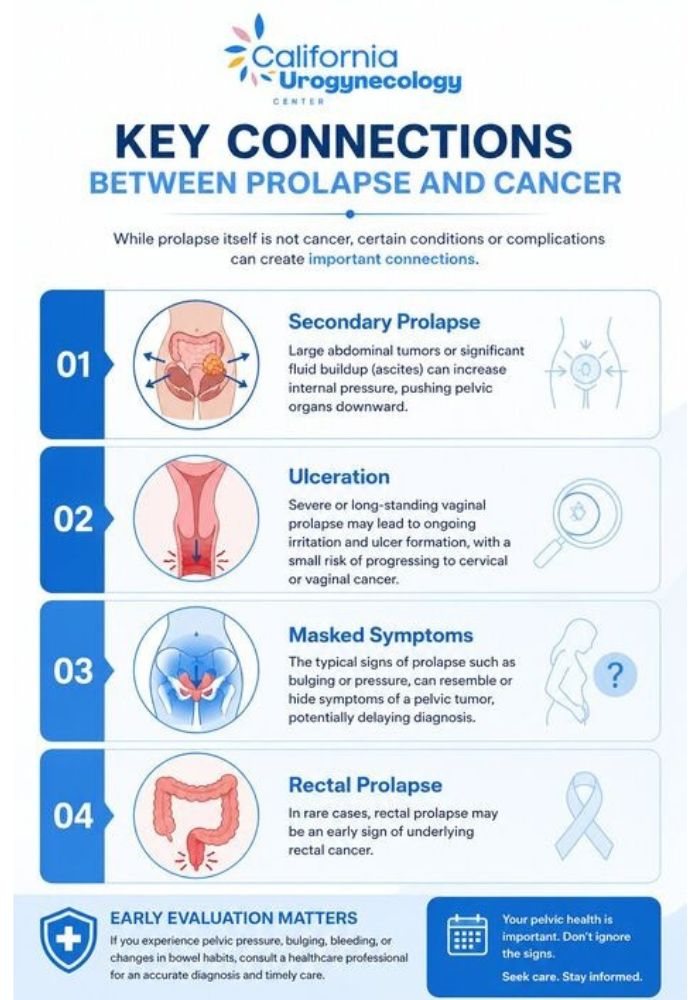
Secondary prolapse: Large abdominal tumors or significant fluid buildup (ascites) can increase internal pressure, pushing pelvic organs downward.
Ulceration: Severe or long-standing vaginal prolapse may lead to ongoing irritation and ulcer formation, with a small risk of progressing to cervical or vaginal cancer.
Masked symptoms: The typical signs of prolapse such as bulging or pressure, can resemble or hide symptoms of a pelvic tumor, potentially delaying diagnosis.
Rectal prolapse: In rare cases, rectal prolapse may be an early sign of underlying rectal cancer.
Bottom Line
Pelvic organ prolapse is not a sign of cancer and is usually related to weakened pelvic support structures. However, because some symptoms can overlap, it’s important to get checked by a healthcare professional for an accurate diagnosis and peace of mind.3
At the California Urogynecology Center, patients receive specialized care for pelvic floor disorders, including pelvic organ prolapse. Under the expertise of Dr. Bilal Kaaki, treatment plans are personalized based on the severity of the condition, symptoms, and patient preferences.
Schedule your appointment today with Dr. Bilal Kaaki at the California Urogynecology Center in Riverside, CA for expert pelvic organ prolapse care.