
Queefing, or vaginal gas, doesn’t necessarily indicate a weak pelvic floor, though muscle strength can play a role in some cases. It’s usually a normal, involuntary release of trapped air that can happen during movement, sexual activity, or exercise. While weaker muscles may contribute, it can also be associated with overly tight pelvic muscles, changes after childbirth, or individual anatomy.
What Is Queefing?
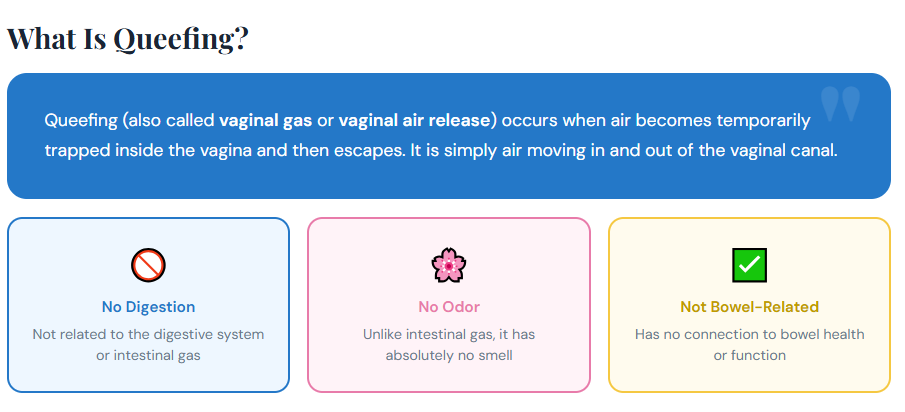
Queefing (also called vaginal gas or vaginal air release) occurs when air becomes temporarily trapped inside the vagina and then escapes.
Unlike intestinal gas:
- It does not involve digestion
- It has no odor
- It is not related to bowel health
It is simply air moving in and out of the vaginal canal.
Why Does Queefing Happen?
The vagina is elastic and changes shape with movement. When the hips or pelvis shift, air can enter and later release.
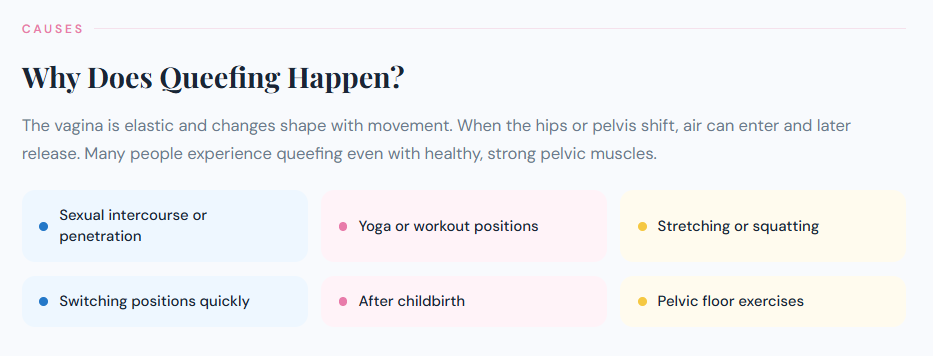
Common situations include:
- Sexual intercourse or penetration
- Certain yoga or workout positions
- Stretching or squatting movements
- Switching positions quickly
- After childbirth
- During pelvic floor exercises
Many people experience queefing even with healthy, strong pelvic muscles.
The Role of the Pelvic Floor
The pelvic floor is a group of muscles supporting the bladder, uterus, and bowel. These muscles control continence, stability, and sexual function.
Queefing can occur with:
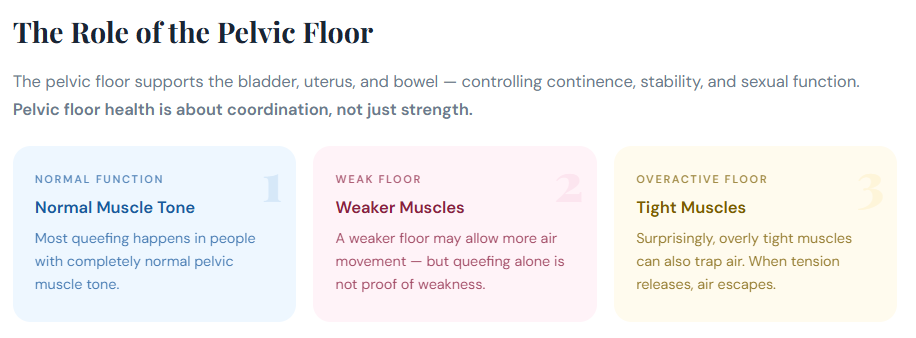
1. Normal Pelvic Floor Function
Most queefing happens in people with completely normal muscle tone.
2. Weak Pelvic Floor Muscles
A weaker pelvic floor may allow more air movement, especially after:
- Pregnancy or vaginal delivery
- Aging or hormonal changes
- Chronic straining
But queefing alone is not proof of weakness.
3. Overactive or Tight Pelvic Floor
Surprisingly, muscles that are too tight can also trap air. When tension releases, air escapes and creates the sound.
This is why pelvic floor health is about coordination, not just strength.
Signs That May Suggest a Pelvic Floor Issue
Queefing becomes medically relevant only when combined with other symptoms such as:
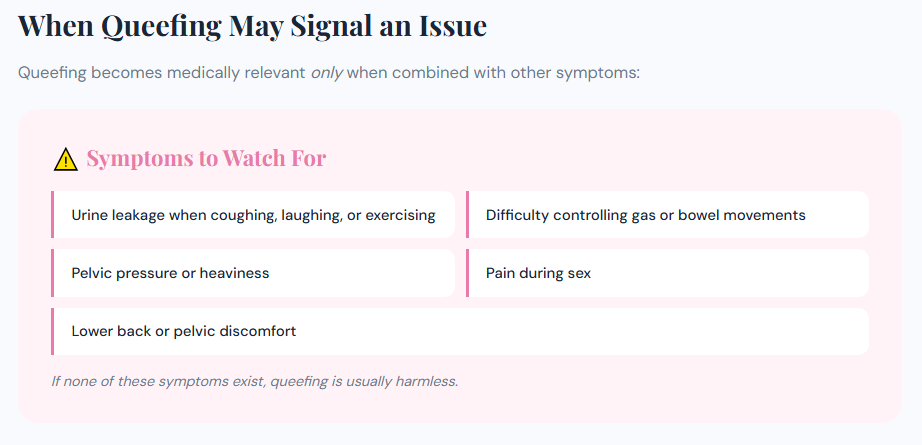
- Urine leakage when coughing, laughing, or exercising
- Difficulty controlling gas or bowel movements
- Pelvic pressure or heaviness
- Pain during sex
- Lower back or pelvic discomfort
If none of these symptoms exist, queefing is usually harmless.
Can You Reduce Queefing?
You usually do not need treatment, but some strategies may help if it bothers you:
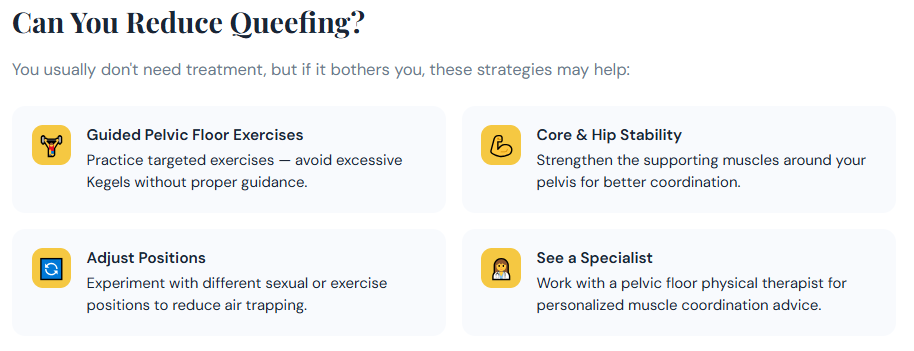
- Practice guided pelvic floor exercises (not excessive Kegels)
- Strengthen core and hip stability
- Change sexual or exercise positions
- Work with a pelvic floor physical therapist for muscle coordination
Avoid doing endless Kegel exercises without evaluation—improper technique can worsen symptoms.
Common Myths About Queefing
Myth: Queefing means your vagina is “loose.”
Fact: Vaginal elasticity is normal and healthy.
Myth: Only postpartum women experience queefing.
Fact: People of all ages experience it.
Myth: It indicates poor sexual health.
Fact: It is a mechanical air movement, not a sexual dysfunction.
When Should You See a Doctor?
Seek professional advice if queefing:
- Starts suddenly after surgery or injury
- Occurs with urinary or bowel leakage
- Causes pain or discomfort
- Interferes with daily activities
A pelvic health specialist can evaluate muscle strength, relaxation, and coordination.
Key Takeaway:
Queefing is a normal and common bodily function.
It does not usually indicate a weak pelvic floor and rarely requires treatment unless other pelvic symptoms are present.