
Rectal prolapse is a condition where part of the rectum slips out through the anus. The most noticeable sign is a reddish bulge or tissue protruding from the anus, especially during or after a bowel movement.
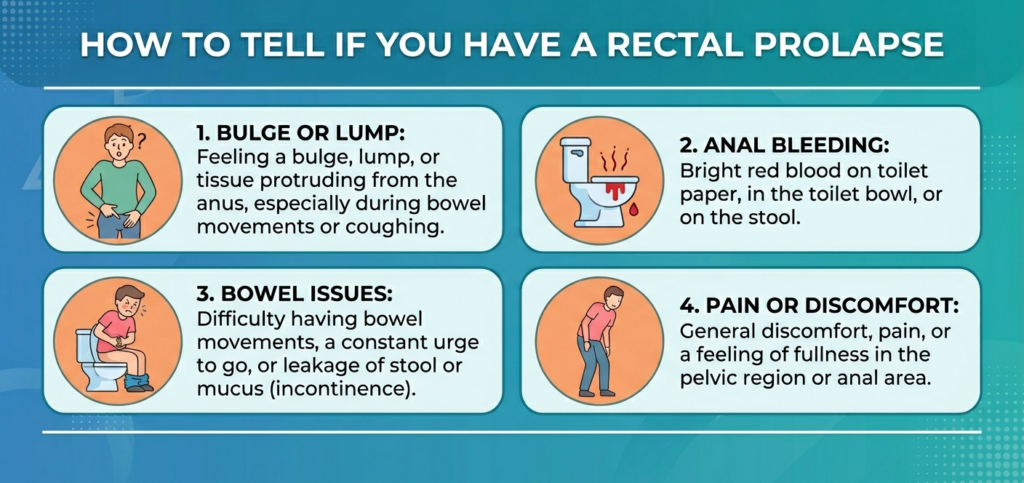
Key Signs and Symptoms
You may have rectal prolapse if you notice:
- A visible bulge or tissue coming out of the anus
- Feeling of pressure or fullness in the rectum
- Mucus discharge or leakage
- Fecal incontinence (loss of bowel control)
- Rectal bleeding
- Difficulty fully emptying your bowels
What Does It Feel Like?
People often describe it as:
- “Something is falling out” during bowel movements
- A lump that may go back in on its own or needs to be pushed back manually
- Discomfort when sitting or walking
Common Causes & Risk Factors
Rectal prolapse is more likely if you have:
- Chronic constipation or straining
- Long-term diarrhea
- Weak pelvic floor muscles (often due to aging or childbirth)
- History of pelvic or colorectal surgery
When to See a Doctor
You should seek medical attention if:
- You see any tissue protruding from your anus
- You experience bleeding, pain, or leakage
- Symptoms are getting worse over time
Early diagnosis helps prevent complications and improves treatment outcomes.
How It’s Diagnosed
A doctor may:
- Perform a physical exam
- Ask you to strain or bear down to observe prolapse
- Recommend tests like colonoscopy or imaging (if needed)
Important Note
Rectal prolapse can sometimes be confused with hemorrhoids, but they are different conditions. If you’re unsure, a medical evaluation is essential for an accurate diagnosis.
Bottom Line
If you notice a bulging tissue from the anus, discomfort, or bowel control issues, it could be rectal prolapse. Consult a healthcare professional for proper diagnosis and treatment.
If you’re experiencing symptoms of rectal prolapse, don’t wait for them to get worse. The expert team at California Urogynecology Center offers advanced and compassionate Rectal Prolapse Treatment in Riverside, CA.
Schedule your consultation today and take the first step toward relief, comfort, and better pelvic health.