
A tight pelvic floor means the muscles cannot relax properly, while a weak pelvic floor means the muscles cannot contract or support pelvic organs effectively. Both conditions can cause similar symptoms but require different treatments.
Signs of a Tight Pelvic Floor (Overactive Pelvic Floor)
You may have a tight pelvic floor if you experience:
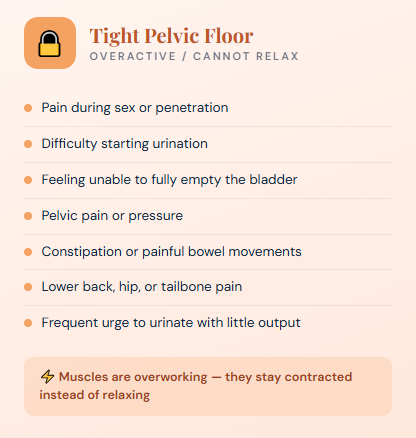
- Pain during sex or penetration
- Difficulty starting urination
- Feeling unable to fully empty the bladder
- Pelvic pain or pressure
- Constipation or painful bowel movements
- Lower back, hip, or tailbone pain
- Frequent urge to urinate without much output
Tight muscles are overworking and stay contracted instead of relaxing.
Signs of a Weak Pelvic Floor (Underactive Pelvic Floor)
You may have a weak pelvic floor if you notice:
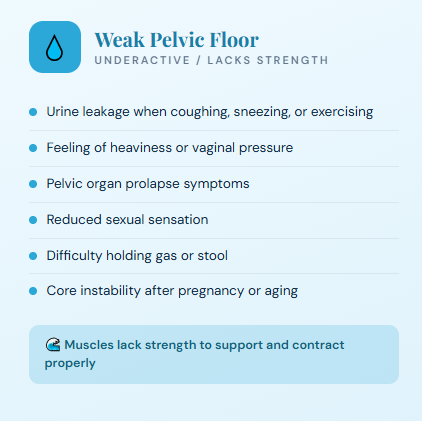
- Urine leakage when coughing, sneezing, or exercising
- Feeling heaviness or vaginal pressure
- Pelvic organ prolapse symptoms
- Reduced sexual sensation
- Difficulty holding gas or stool
- Core instability after pregnancy or aging
Weak muscles lack strength and support.
Why People Confuse Tight vs Weak Pelvic Floor
Many people assume all pelvic issues mean weakness and start doing Kegel exercises.
Important:
If your pelvic floor is tight, Kegels can actually worsen symptoms.
A proper evaluation by a pelvic health specialist or healthcare provider helps determine whether muscles need relaxation training or strengthening therapy.
Simple Self-Check (Not a Diagnosis)
Ask yourself:
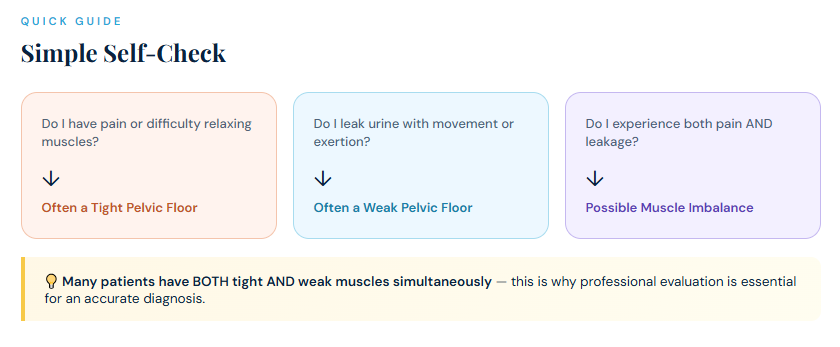
- Do I leak urine? → Often weak pelvic floor
- Do I have pain or difficulty relaxing muscles? → Often tight pelvic floor
- Do I feel both symptoms? → You may have muscle imbalance
Many patients actually have tight AND weak muscles at the same time.
When to Seek Professional Help
You should consider evaluation if symptoms affect:
- Sexual health
- Bladder or bowel function
- Postpartum recovery
- Menopause changes
- Chronic pelvic pain
Pelvic floor physical therapy or medical evaluation can identify the exact issue and create a personalized treatment plan.
Key Takeaway:
- Tight pelvic floor = muscles won’t relax
- Weak pelvic floor = muscles lack strength
- Correct diagnosis matters because treatment approaches are opposite.
If you’re experiencing pelvic pain, urine leakage, or discomfort that may be related to pelvic floor dysfunction, professional evaluation can make a real difference. The specialists at California Urogynecology Center provide personalized and evidence-based pelvic floor treatment in Riverside, CA, helping patients restore comfort, confidence, and daily function.
Schedule a consultation today to get the right diagnosis and a treatment plan tailored specifically to your needs.