
Pelvic organ prolapse can affect the bladder, uterus, rectum, or vaginal walls when the muscles and connective tissues supporting the pelvic organs become weakened. Some women have mild symptoms that can be managed without surgery, while others experience significant pressure, bulging, urinary problems, or bowel difficulties that may require a surgical approach.
The good news is that treatment is not one-size-fits-all. Depending on the severity of the prolapse, symptoms, overall health, lifestyle, and personal preferences, options may include pelvic floor exercises, a vaginal pessary, lifestyle changes, or Pelvic Organ Prolapse Surgery.
Understanding the differences between nonsurgical and surgical treatment can help you have a more informed conversation with a urogynecologist about the best approach for your needs.
What Is Pelvic Organ Prolapse?
Pelvic organ prolapse occurs when the muscles and tissues supporting the pelvic organs become weakened, allowing one or more organs to move downward from their normal position.
Common types include:
- Bladder prolapse, or cystocele: The bladder bulges into the front wall of the vagina.
- Rectocele: The rectum bulges into the back wall of the vagina.
- Uterine prolapse: The uterus descends into the vagina.
- Vaginal vault prolapse: The top of the vagina drops after a hysterectomy.
- Enterocele: The small intestine pushes into the vaginal area.
Symptoms can range from mild pelvic pressure to a noticeable vaginal bulge. Some women also experience urinary leakage, difficulty emptying the bladder, constipation, discomfort during intercourse, or lower back pressure.
When Can Prolapse Be Treated Without Surgery?
Nonsurgical treatment is often considered first, particularly when symptoms are mild or moderate and are not significantly interfering with daily activities. Some women with prolapse may not require treatment at all if they have no bothersome symptoms.
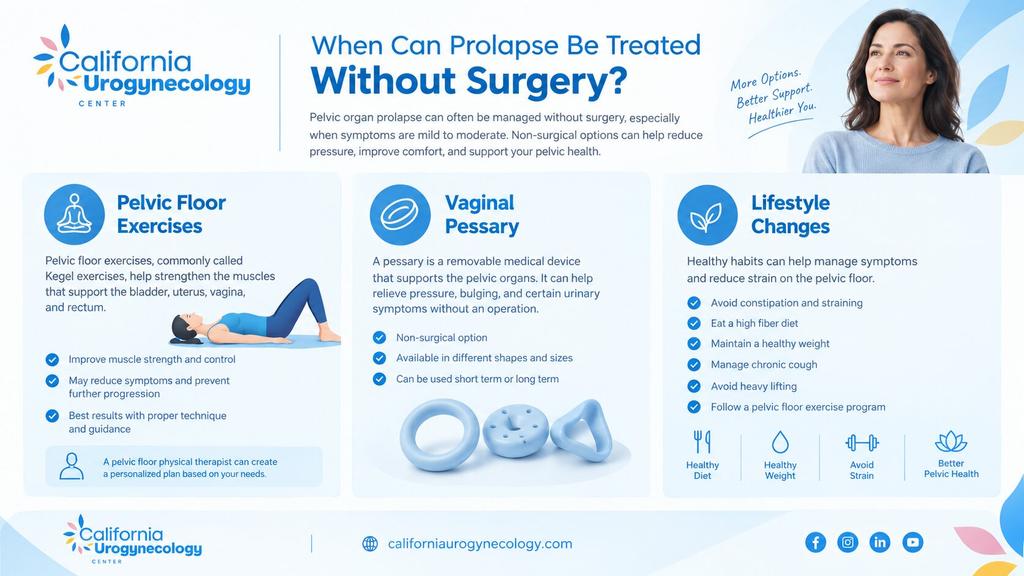
Pelvic Floor Exercises
Pelvic floor exercises, commonly called Kegel exercises, strengthen the muscles that help support the bladder, uterus, vagina, and rectum.
A properly designed pelvic floor exercise program may help improve bladder control and support pelvic function. However, technique matters. Performing exercises incorrectly may not provide the intended benefit, which is why some women benefit from guidance from a pelvic floor physical therapist.
For women interested in strengthening their pelvic floor, professional pelvic floor therapy in Riverside, CA can provide individualized guidance based on their symptoms and pelvic health needs.
Vaginal Pessary
A pessary is a removable medical device placed inside the vagina to support the pelvic organs. Different shapes and sizes are available, and the appropriate option depends on the type of prolapse and individual anatomy.
For some women, a pessary can provide meaningful relief from pressure, bulging, and certain urinary symptoms without an operation. It may be used temporarily, long term, or while deciding whether surgery is appropriate.
Lifestyle Changes
Certain lifestyle measures may help reduce symptoms or prevent additional strain on the pelvic floor. These may include:
- Avoiding constipation and excessive straining
- Eating adequate dietary fiber
- Maintaining a healthy weight
- Addressing chronic coughing
- Avoiding unnecessary heavy lifting
- Managing bladder symptoms
- Following an appropriate pelvic floor exercise program
These measures may help manage symptoms, but they do not physically restore weakened pelvic support structures.
When Is Surgery Considered for Prolapse?
Surgery may be considered when prolapse symptoms significantly affect quality of life, interfere with daily activities, or continue despite nonsurgical treatment.
A woman may also consider surgery when she cannot tolerate or does not receive enough relief from a pessary or when the degree of prolapse is more advanced.
The decision should be based on more than the stage of prolapse alone. Your symptoms, health, future pregnancy plans, sexual activity, previous surgeries, and personal treatment goals can all influence the decision.
What Does Pelvic Organ Prolapse Surgery Involve?
Pelvic Organ Prolapse Surgery aims to restore support to the affected pelvic organs. The specific procedure depends on the type and location of prolapse.
Common surgical approaches include:
Anterior Vaginal Repair
Also called anterior colporrhaphy, this procedure is commonly used when the bladder bulges into the front vaginal wall. The vaginal tissue is repaired to improve support for the bladder.
Posterior Vaginal Repair
Posterior repair may be performed when the rectum bulges into the back wall of the vagina. The procedure strengthens the vaginal wall and addresses the underlying support problem.
Sacrocolpopexy
Sacrocolpopexy is commonly used for vaginal vault prolapse and certain complex prolapse cases. It involves attaching the vaginal apex to supportive tissue near the sacrum, often using surgical mesh. The procedure can be performed through an abdominal incision or minimally invasive techniques.
Uterosacral or Sacrospinous Suspension
These procedures use supportive pelvic structures to suspend the uterus or vaginal apex. They are examples of reconstructive prolapse surgery using the patient’s own tissues.
Hysterectomy With Prolapse Repair
In selected patients with uterine prolapse, hysterectomy may be performed along with prolapse repair. However, removing the uterus is not automatically required for every woman with uterine prolapse. The appropriate approach depends on individual circumstances and treatment goals.
Nonsurgical Treatment vs Surgery: How Do They Compare?
| Factor | Nonsurgical Treatment | Surgery |
|---|---|---|
| Invasiveness | No operation required | Requires a surgical procedure |
| Recovery | Usually little or no downtime | Requires recovery time |
| Pessary | Can provide physical support | Repairs or reconstructs pelvic support |
| Pelvic floor exercises | May improve muscle function and symptoms | Does not replace surgical repair |
| Best suited for | Mild to moderate symptoms or women avoiding surgery | Significant symptoms or prolapse not adequately controlled conservatively |
| Long-term considerations | May require ongoing management | Prolapse can recur after surgery |
| Personal choice | Often a good first option | Considered when benefits outweigh risks |
Neither approach is automatically better for everyone. The right treatment depends on the individual and how prolapse affects her life.
What Are the Benefits and Limitations of Each Approach?
Nonsurgical treatments have the advantage of avoiding surgical risks and may provide substantial symptom relief. A pessary, for example, can support the pelvic organs without an operation. However, nonsurgical treatment generally manages symptoms and support rather than surgically repairing damaged or weakened tissues.
Surgery can provide a more definitive anatomical repair and may be appropriate for women with significant or persistent symptoms. However, it involves recovery and potential complications. Even after successful surgery, prolapse can recur, and not every symptom is guaranteed to disappear.
For women experiencing bladder-related symptoms alongside prolapse, specialized care may also be helpful. Learn more about [urinary incontinence treatment in Riverside] to understand available options.
Which Prolapse Treatment Is Right for You?
There is no universal answer to whether nonsurgical treatment or surgery is best. A urogynecologic evaluation can help determine the type and severity of prolapse and identify whether your symptoms are related to bladder, bowel, vaginal, or uterine support problems.
Nonsurgical treatment may be a reasonable starting point when symptoms are manageable. Surgery may become appropriate when symptoms are persistent, significantly affecting daily life, or not adequately controlled with conservative options.
Your treatment plan should also take into account your future pregnancy plans, overall health, previous pelvic surgery, sexual activity, and personal preferences.
Frequently Asked Questions
Can pelvic organ prolapse be treated without surgery?
Yes. Depending on the severity and symptoms, treatment may include pelvic floor exercises, a pessary, lifestyle changes, and observation. Some women with mild or asymptomatic prolapse may not need active treatment.
Is surgery always necessary for pelvic organ prolapse?
No. Surgery is not automatically required. It is generally considered when symptoms are bothersome, significantly affect quality of life, or do not improve sufficiently with nonsurgical treatment.
Can a pessary cure prolapse?
A pessary supports the pelvic organs and can reduce symptoms, but it does not permanently repair weakened pelvic support tissues. It can be an effective nonsurgical management option for many women.
Can 9pelvic floor exercises make prolapse better?
Pelvic floor exercises may improve muscle strength, bladder control, and pelvic floor function and may help slow progression in some women. Proper technique is important, so professional instruction can be beneficial.
Can prolapse come back after surgery?
Yes. Prolapse can recur after surgery. The risk varies based on factors such as the type and severity of prolapse and individual health factors.
Take the Next Step Toward Better Pelvic Health
Living with pelvic pressure, vaginal bulging, urinary leakage, or bowel difficulties does not mean you have to manage the symptoms alone. Whether you are considering pelvic floor therapy, a pessary, or Pelvic Organ Prolapse Surgery, an individualized evaluation can help you understand your options.
California Urogynecology Center, led by Dr. Bilal Kaaki, provides specialized care for pelvic floor disorders and prolapse. If you are experiencing symptoms, schedule a consultation to discuss whether nonsurgical treatment or surgical repair may be appropriate for you.