
Uterine prolapse can affect more than physical comfort. It may interfere with daily activities, exercise, bladder function, bowel movements, and overall quality of life. While mild cases can often be managed with pelvic floor exercises or a pessary, surgery may be the most effective treatment for women with moderate to severe prolapse or persistent symptoms.
Understanding the available uterine prolapse surgery procedures can help you make informed decisions about your care. Modern surgical techniques focus on restoring pelvic support, relieving symptoms, and helping women return to an active lifestyle with minimal discomfort.
This guide explains when surgery is recommended, the different surgical options, recovery expectations, benefits, risks, and how to choose the right treatment.
What Is Uterine Prolapse?
Uterine prolapse occurs when the muscles and ligaments supporting the uterus become weak or stretched. As a result, the uterus drops downward into the vaginal canal. In advanced cases, it may extend outside the vaginal opening.
Common causes include:
- Pregnancy and vaginal childbirth
- Aging
- Menopause
- Chronic constipation
- Obesity
- Repeated heavy lifting
- Chronic coughing
- Genetic weakness of connective tissues
Many women also experience other prolapsed pelvic organs, such as the bladder (cystocele) or rectum (rectocele), at the same time.
When Is Uterine Prolapse Surgery Needed?
Not every woman with uterine prolapse requires surgery. Conservative treatments are often recommended first.
Surgery may be appropriate if:
- The prolapse significantly affects daily life
- Pelvic pressure or bulging becomes severe
- Urinary or bowel symptoms persist
- A pessary does not provide adequate relief
- Pelvic floor therapy has not improved symptoms
- The prolapse continues to worsen
- You no longer plan future pregnancies
A urogynecologist evaluates your symptoms, medical history, age, overall health, and personal goals before recommending surgery.
Types of Uterine Prolapse Surgery Procedures
Several surgical options are available depending on the severity of prolapse, age, overall health, and whether preserving the uterus is desired.
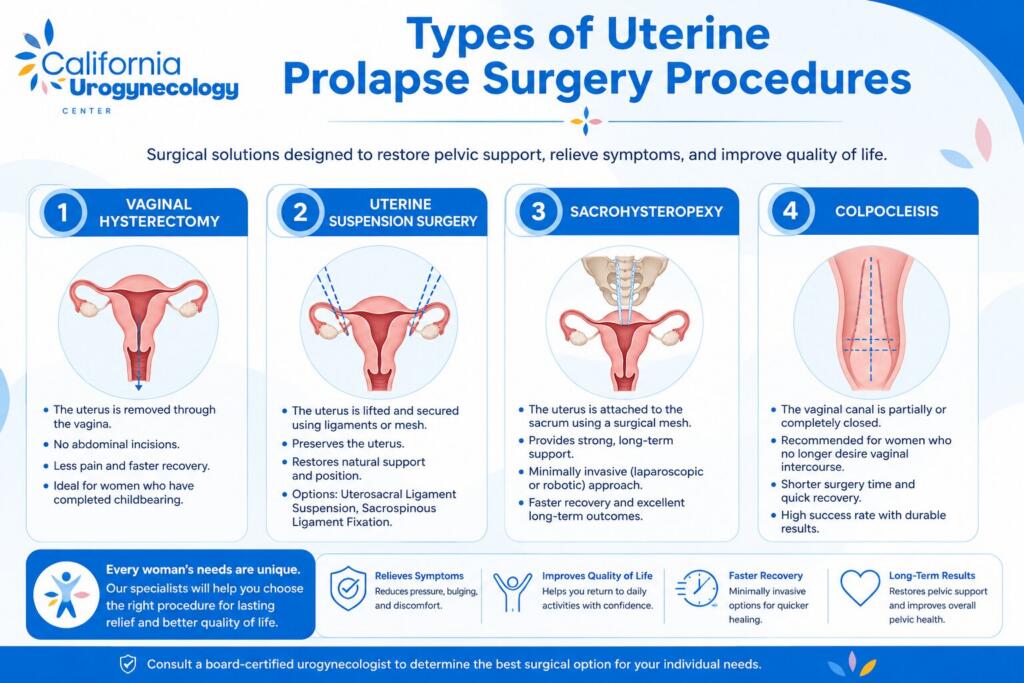
1. Vaginal Hysterectomy
A vaginal hysterectomy removes the uterus through the vagina without abdominal incisions.
This procedure is commonly recommended for women who:
- Have completed childbearing
- Have advanced uterine prolapse
- Prefer permanent treatment
Benefits include:
- No large abdominal incision
- Less postoperative discomfort
- Faster recovery
- High success rates
2. Uterine Suspension Surgery
Women who wish to keep their uterus may be candidates for uterine suspension.
During this procedure, the surgeon repositions the uterus and secures it using strong pelvic ligaments or surgical mesh in selected cases.
Common techniques include:
Uterosacral Ligament Suspension
The uterus is attached to the uterosacral ligaments to restore natural support.
Sacrospinous Ligament Fixation
The uterus or vaginal apex is attached to the sacrospinous ligament for additional stability.
These uterus-preserving procedures are becoming increasingly popular among women seeking alternatives to hysterectomy.
3. Sacrohysteropexy
Sacrohysteropexy is a minimally invasive robotic or laparoscopic procedure that preserves the uterus.
The surgeon attaches the uterus to the sacrum using a surgical graft or mesh, restoring normal pelvic anatomy.
Advantages include:
- Excellent long-term support
- Smaller incisions
- Less blood loss
- Shorter hospital stay
- Faster return to daily activities
4. Colpocleisis
Colpocleisis is generally recommended for older women who no longer desire vaginal intercourse.
The vaginal canal is surgically closed to support prolapsed organs.
Benefits include:
- Short operative time
- High success rate
- Minimal recovery time
- Low complication risk
Additional Procedures for Prolapsed Pelvic Organs Surgery
Many women have more than one pelvic organ affected.
During Prolapsed Pelvic Organs surgery, your surgeon may repair additional areas to restore complete pelvic support.
These procedures may include:
| Procedure | Treats |
|---|---|
| Anterior Colporrhaphy | Bladder prolapse (cystocele) |
| Posterior Colporrhaphy | Rectocele |
| Enterocele Repair | Small bowel prolapse |
| Vaginal Vault Suspension | Vaginal prolapse after hysterectomy |
| Stress Incontinence Surgery | Urinary leakage |
Repairing multiple prolapsed organs during one operation often improves long-term outcomes and reduces the need for future surgeries.
Minimally Invasive Surgical Techniques
Many modern uterine prolapse surgeries are performed using minimally invasive methods.
These include:
Laparoscopic Surgery
Small incisions and specialized instruments allow surgeons to perform complex repairs with less tissue damage.
Robotic-Assisted Surgery
Robotic technology offers enhanced precision, improved visualization, and greater surgical control.
Potential benefits include:
- Smaller scars
- Reduced pain
- Lower blood loss
- Shorter hospital stays
- Faster recovery
- Earlier return to work
Preparing for Uterine Prolapse Surgery
Proper preparation helps improve surgical outcomes.
Your healthcare provider may recommend:
- Physical examination
- Pelvic ultrasound if needed
- Urinary function testing
- Blood tests
- Medication review
- Smoking cessation
- Weight management
- Pelvic floor exercises before surgery
You should also discuss:
- Future pregnancy plans
- Sexual activity
- Lifestyle expectations
- Recovery timeline
Recovery After Uterine Prolapse Surgery
Recovery varies depending on the procedure performed.
Typical Recovery Timeline
| Recovery Stage | What to Expect |
|---|---|
| First few days | Mild discomfort and light vaginal bleeding |
| 2 to 4 weeks | Walking increases, daily activities gradually resume |
| 6 weeks | Most women return to normal routines |
| 8 to 12 weeks | Heavy lifting and strenuous exercise may resume with medical approval |
During recovery:
- Avoid heavy lifting
- Stay hydrated
- Prevent constipation
- Walk daily
- Attend follow-up appointments
- Follow all postoperative instructions carefully
Benefits of Uterine Prolapse Surgery
Successful surgery can significantly improve quality of life.
Many women experience:
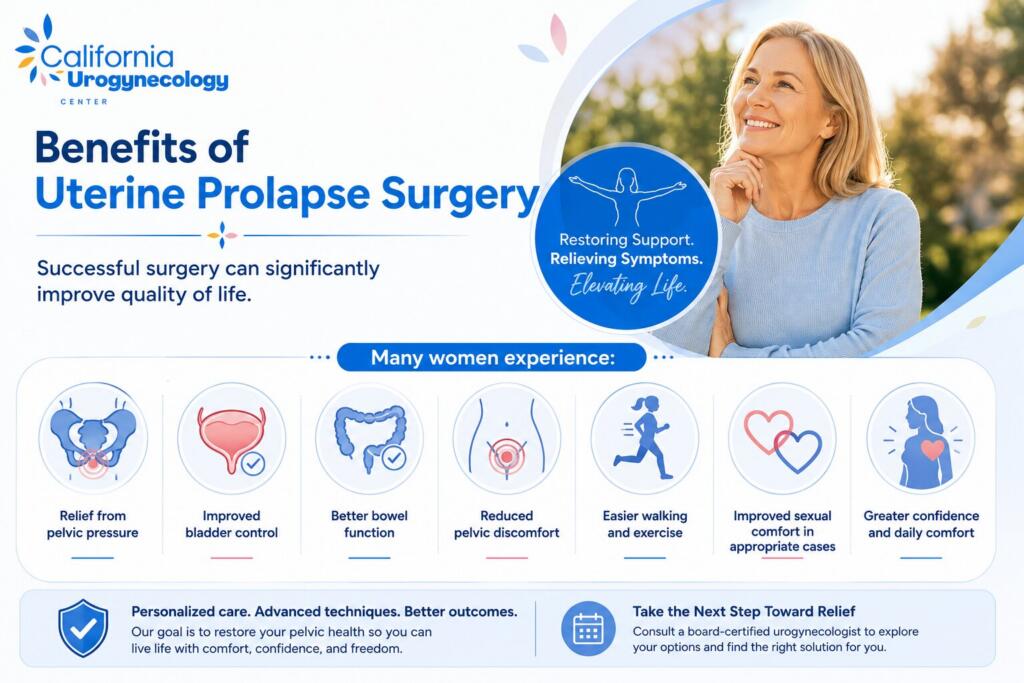
- Relief from pelvic pressure
- Improved bladder control
- Better bowel function
- Reduced pelvic discomfort
- Easier walking and exercise
- Improved sexual comfort in appropriate cases
- Greater confidence and daily comfort
Modern Prolapsed Pelvic Organs surgery also aims to preserve normal pelvic anatomy while reducing the likelihood of recurrence.
Possible Risks and Complications
Although uterine prolapse surgery is generally safe, every surgical procedure carries some risks.
Possible complications include:
- Infection
- Bleeding
- Blood clots
- Temporary urinary retention
- Recurrence of prolapse
- Injury to nearby organs
- Pain during intercourse
- Mesh-related complications in procedures where mesh is used
Choosing an experienced urogynecologist helps reduce these risks.
Can Uterine Prolapse Return After Surgery?
While surgery has a high success rate, recurrence is possible.
The risk depends on:
- Age
- Tissue quality
- Obesity
- Chronic constipation
- Heavy lifting
- Smoking
- Future pregnancies
Maintaining pelvic floor health after surgery can help prolong results.
Helpful habits include:
- Performing pelvic floor exercises
- Maintaining a healthy weight
- Treating chronic cough
- Avoiding excessive straining
- Following postoperative activity guidelines
How to Choose the Right Surgical Procedure
There is no single procedure that is best for every woman.
Treatment depends on:
- Severity of prolapse
- Age
- Overall health
- Desire to preserve the uterus
- Future pregnancy plans
- Other pelvic floor disorders
- Surgeon experience
A personalized evaluation ensures the surgical plan matches your individual needs and goals.
Frequently Asked Questions
- Is uterine prolapse surgery painful?
Most women experience mild to moderate discomfort that is well managed with medication. Minimally invasive procedures typically involve less postoperative pain than traditional open surgery.
- How long does recovery take after uterine prolapse surgery?
Most patients recover within 6 to 8 weeks, although complete healing may take several months depending on the procedure performed.
- Can I keep my uterus during prolapse surgery?
Yes. Uterus-preserving procedures such as uterine suspension and sacrohysteropexy may be appropriate for selected patients.
- What is the success rate of uterine prolapse surgery?
Most modern procedures have high success rates, particularly when performed by experienced pelvic floor specialists and combined with healthy lifestyle habits after surgery.
- Will surgery fix bladder problems too?
If bladder prolapse or urinary incontinence is present, additional procedures can often be performed during the same operation to address these concerns.
- Is minimally invasive surgery better?
For many patients, laparoscopic and robotic-assisted surgery offers benefits such as smaller incisions, less pain, shorter hospital stays, and quicker recovery. However, the best approach depends on your individual condition.
Summary
Uterine prolapse surgery offers effective, long-lasting relief for women whose symptoms interfere with everyday life. From vaginal hysterectomy and uterine-preserving procedures to minimally invasive robotic techniques, today’s surgical options are designed to restore pelvic support, improve comfort, and enhance quality of life. A thorough evaluation by a pelvic floor specialist is essential to determine the most appropriate treatment based on your symptoms, health, and personal goals.
Take the Next Step Toward Lasting Relief
If uterine prolapse is affecting your comfort, mobility, or confidence, expert care can help you explore the right treatment options. At California Urogynecology Center, led by Dr. Bilal Kaaki, we provide personalized evaluations and advanced Prolapsed Pelvic Organs surgery solutions, including minimally invasive and robotic techniques. Schedule a consultation today to discuss your symptoms and create a treatment plan designed to restore your pelvic health and improve your quality of life.