
The first signs of menopause usually begin with changes in your menstrual cycle, along with symptoms like hot flashes, sleep issues, mood changes, and vaginal dryness. These early changes often start during perimenopause, which is the transition phase before menopause.
Menopause does not happen suddenly. It is a gradual biological process where the ovaries slowly produce less estrogen and progesterone. The earliest phase of this transition is called perimenopause, and it can start in your 40s (sometimes even late 30s for some women).
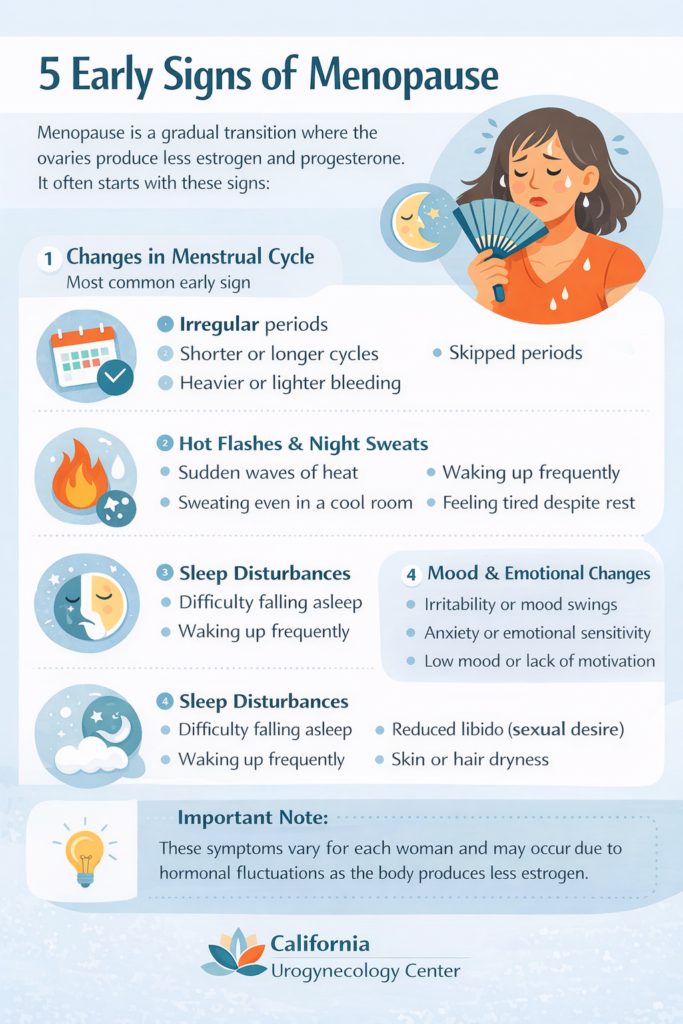
1. Changes in menstrual cycle (most common early sign)
One of the first and most noticeable signs is a change in your periods, such as:
- Periods becoming irregular
- Cycle length becoming shorter or longer
- Heavier or lighter bleeding than usual
- Skipped periods
This happens because hormone levels begin to fluctuate unpredictably.
2. Hot flashes and night sweats
Many women begin to experience:
- Sudden waves of heat in the face, neck, or chest
- Sweating even when the environment is cool
- Night sweats that may disrupt sleep
These are caused by changes in the body’s temperature regulation due to declining estrogen levels.
3. Sleep disturbances
Sleep issues can appear even without night sweats, including:
- Difficulty falling asleep
- Waking up frequently during the night
- Feeling tired even after sleeping
Poor sleep can also worsen mood changes and fatigue.
4. Mood and emotional changes
Hormonal shifts can affect brain chemistry, leading to:
- Irritability or mood swings
- Anxiety or feeling emotionally sensitive
- Low mood or lack of motivation
These changes are normal but can vary in intensity.
5. Physical and vaginal changes
Some women may also notice:
- Vaginal dryness or discomfort during intercourse
- Reduced libido (sexual desire)
- Mild weight gain or changes in body fat distribution
- Skin dryness or hair thinning
Why these changes happen
All of these symptoms are linked to the natural decline of estrogen, a key hormone that regulates the menstrual cycle, mood, temperature, and reproductive health.
Important to know
Every woman experiences menopause differently. Some may have mild symptoms, while others may experience multiple changes at once. Symptoms can start gradually and may last for several years before periods fully stop.
If symptoms are affecting your daily life, a healthcare provider can help with diagnosis, hormone evaluation, and treatment options such as lifestyle changes or hormone therapy.
If you are experiencing early signs of menopause such as irregular periods, hot flashes, or mood changes, you don’t have to manage it alone.
The California Urogynecology Center provides personalized menopause evaluation and treatment in Riverside, CA, helping women better understand their symptoms and find effective relief options tailored to their needs.
Schedule a consultation today with the California Urogynecology Center in Riverside, CA, and get expert care you can trust.