
Menopause is a natural stage in every woman’s life, yet many women feel unprepared for the physical and emotional changes that come with it. Understanding menopause Treatment can help you recognize symptoms early, make informed healthcare decisions, and improve your overall quality of life.
At California Urogynecology Center, we help women navigate menopause with personalized care designed to address symptoms, protect long-term health, and support overall well-being under the guidance of Dr. Bilal Kaaki.
What Is Menopause?
Menopause is the point in a woman’s life when her menstrual periods permanently stop due to a natural decline in reproductive hormones. A woman is officially considered menopausal after going 12 consecutive months without a menstrual period.
Menopause typically occurs between the ages of 45 and 55, with the average age in the United States being around 51 years old. However, every woman’s experience is unique, and symptoms can begin several years before menopause officially occurs.
Menopause is not a disease or medical condition. Rather, it is a normal biological transition that marks the end of a woman’s reproductive years.
What Causes Menopause?
Menopause occurs when the ovaries gradually produce less estrogen and progesterone, the hormones responsible for regulating the menstrual cycle and supporting reproductive health.
As hormone levels decline, ovulation becomes less predictable, periods become irregular, and eventually menstruation stops completely.
Several factors can influence when menopause begins, including:
- Age
- Genetics
- Smoking
- Certain medical treatments
- Surgical removal of the ovaries
- Cancer therapies such as chemotherapy or radiation
The Three Stages of Menopause
Understanding the stages of menopause can help women recognize what changes to expect.
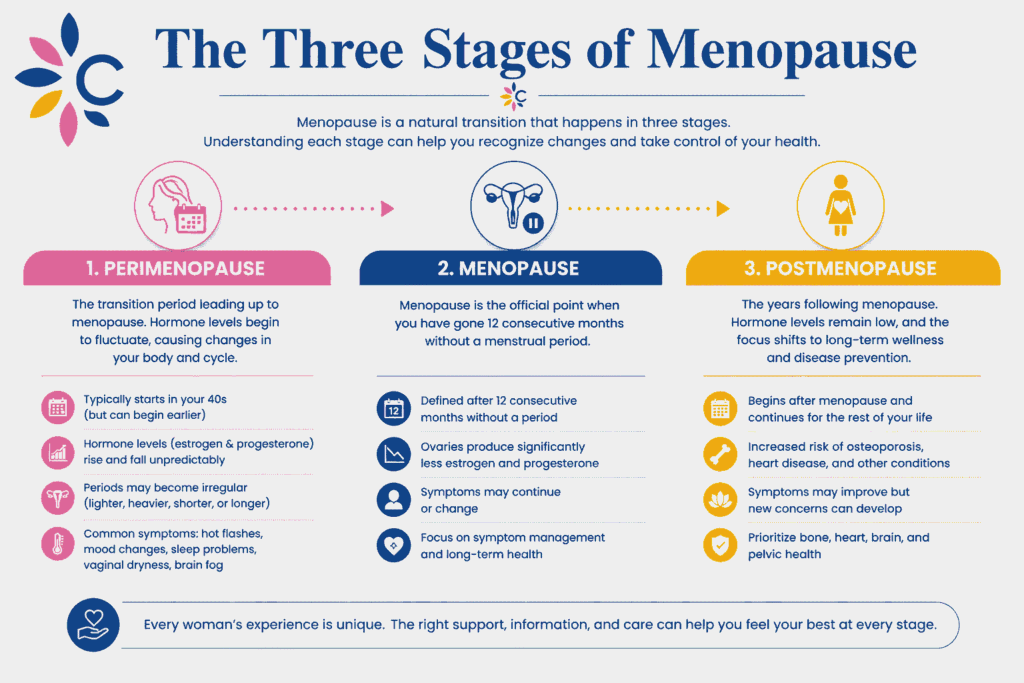
Perimenopause
Perimenopause is the transitional period leading up to menopause. It often begins in a woman’s 40s but can start earlier.
During this stage, hormone levels fluctuate significantly, leading to symptoms such as:
- Irregular periods
- Hot flashes
- Mood changes
- Sleep disturbances
- Vaginal dryness
Perimenopause can last anywhere from several months to more than ten years.
Menopause
Menopause is officially diagnosed after 12 consecutive months without a menstrual period.
At this stage, the ovaries have largely stopped releasing eggs and produce significantly lower levels of estrogen and progesterone.
Postmenopause
Postmenopause refers to the years following menopause.
While some symptoms may improve over time, lower estrogen levels can increase the risk of certain health conditions, including:
- Osteoporosis
- Heart disease
- Urinary incontinence
- Pelvic floor disorders
- Vaginal atrophy
Regular healthcare visits become especially important during this stage.
Common Symptoms of Menopause
Menopause affects every woman differently. Some women experience mild symptoms, while others find symptoms disruptive to their daily lives.
Common menopause symptoms include:
Hot Flashes
Hot flashes are sudden feelings of warmth that can spread throughout the body. They often affect the face, neck, and chest and may be accompanied by sweating and flushing.
Night Sweats
Night sweats are hot flashes that occur during sleep and can significantly disrupt rest.
Irregular Periods
Periods may become lighter, heavier, shorter, or farther apart before stopping altogether.
Vaginal Dryness
Declining estrogen levels can reduce vaginal lubrication, leading to discomfort, irritation, and painful intercourse.
Mood Changes
Many women experience:
- Anxiety
- Irritability
- Mood swings
- Depression
Sleep Problems
Hormonal changes can contribute to insomnia and poor sleep quality.
Weight Gain
Changes in metabolism and hormone levels may make maintaining a healthy weight more challenging.
Brain Fog
Women often report difficulties with concentration, memory, and mental clarity during menopause.
How Menopause Affects Pelvic and Urinary Health
Menopause can significantly impact the bladder, pelvic floor muscles, and vaginal tissues.
As estrogen levels decline, tissues in the pelvic region may become thinner, less elastic, and weaker.
Women may experience:
- Urinary urgency
- Frequent urination
- Bladder leakage
- Recurrent urinary tract infections
- Pelvic organ prolapse
- Overactive bladder symptoms
Because these symptoms often overlap with pelvic floor disorders, many women benefit from evaluation by a urogynecologist.
How Is Menopause Diagnosed?
Menopause is typically diagnosed based on symptoms, age, and menstrual history.
Your healthcare provider may ask about:
- Changes in your menstrual cycle
- Frequency of symptoms
- Family history
- Medical history
In some cases, blood tests may be used to evaluate hormone levels, particularly if menopause occurs earlier than expected.
Treatment Options for Menopause
Not every woman requires treatment during menopause. However, if symptoms interfere with daily life, several effective options are available.
Hormone Replacement Therapy (HRT)
Hormone Replacement Therapy helps replace declining estrogen and progesterone levels.
Benefits may include:
- Reduced hot flashes
- Improved sleep
- Better mood stability
- Relief from vaginal dryness
- Protection against bone loss
Non-Hormonal Treatments
Women who cannot or choose not to use hormones may benefit from:
- Prescription medications
- Lifestyle changes
- Stress management techniques
- Dietary modifications
- Regular exercise
Vaginal Estrogen Therapy
Low-dose vaginal estrogen can effectively treat vaginal dryness, irritation, and urinary symptoms with minimal systemic absorption.
Pelvic Floor Therapy
Pelvic floor rehabilitation can help strengthen muscles that support the bladder, uterus, and pelvic organs.
This treatment may improve:
- Urinary incontinence
- Pelvic pressure
- Sexual function
- Overall pelvic health
When Should You See a Menopause Specialist?
You should consider seeking professional care if menopause symptoms are:
- Affecting your quality of life
- Disrupting sleep
- Causing bladder control issues
- Interfering with intimacy
- Leading to significant mood changes
- Associated with pelvic pressure or prolapse symptoms
A specialist can develop a personalized treatment plan based on your health history, symptoms, and goals.
FAQs
What age does menopause usually begin?
Most women experience menopause between ages 45 and 55, with the average age being around 51.
Can menopause happen early?
Yes. Early menopause occurs before age 45, while premature menopause occurs before age 40.
How long do menopause symptoms last?
Symptoms vary greatly. Some women experience symptoms for a few years, while others may have symptoms that persist longer.
Can menopause cause bladder problems?
Yes. Lower estrogen levels can contribute to urinary urgency, bladder leakage, recurrent UTIs, and other pelvic floor concerns.
Is menopause a medical condition?
No. Menopause is a natural biological transition. However, symptoms can sometimes require medical treatment to improve quality of life.
Take the Next Step Toward Menopause Relief
You do not have to navigate menopause symptoms alone. Whether you’re experiencing hot flashes, night sweats, vaginal dryness, bladder leakage, pelvic discomfort, or other changes affecting your quality of life, personalized treatment options are available.
At California Urogynecology Center, menopause care is led by Dr. Bilal Kaaki, a nationally recognized urogynecologist with extensive experience in women’s pelvic and hormonal health. Dr. Kaaki and his team take a patient-centered approach, helping women understand their symptoms and develop individualized treatment plans that align with their health goals and lifestyle.
From hormone replacement therapy and non-hormonal solutions to advanced treatment for urinary and pelvic floor concerns, we are committed to helping women find lasting relief and maintain their quality of life through every stage of menopause.
Schedule a consultation with Dr. Bilal Kaaki today to discuss your symptoms, explore your treatment options, and take the first step toward feeling your best again.