
Pelvic organ prolapse can significantly affect a woman’s comfort, confidence, and quality of life. While many cases can be managed with pelvic floor therapy or pessary devices, some women experience symptoms severe enough to require surgical treatment.
If you’ve been told you may need pelvic organ prolapse surgery, it’s natural to have questions about what the procedure involves, when it’s necessary, and what recovery looks like.
This guide explains everything you need to know about pelvic organ prolapse surgery, including the different surgical options, benefits, risks, recovery expectations, and how to determine whether surgery may be right for you.
What Is Pelvic Organ Prolapse Surgery?
Pelvic organ prolapse surgery is a procedure performed to restore pelvic organs that have shifted from their normal position due to weakened pelvic floor muscles and connective tissues.
The surgery helps support organs such as the:
- Bladder
- Uterus
- Vaginal vault
- Rectum
- Small intestine
By repairing damaged support structures, surgery can relieve symptoms and improve bladder, bowel, and sexual function.
Quick Answer
Pelvic organ prolapse surgery is a treatment used to repair weakened pelvic floor support and reposition prolapsed pelvic organs, helping reduce pressure, discomfort, urinary symptoms, and vaginal bulging.
Understanding Pelvic Organ Prolapse
Pelvic organ prolapse (POP) occurs when muscles, ligaments, and connective tissues supporting the pelvic organs become weakened or stretched.
As support decreases, one or more pelvic organs may descend into or through the vaginal canal.
Common Types of Pelvic Organ Prolapse
| Type | Organ Affected |
|---|---|
| Cystocele | Bladder prolapse |
| Rectocele | Rectum prolapse |
| Uterine prolapse | Uterus descends |
| Enterocele | Small intestine prolapse |
| Vaginal vault prolapse | Top of the vagina drops after hysterectomy |
What Causes Pelvic Organ Prolapse?
Several factors increase the risk of prolapse:
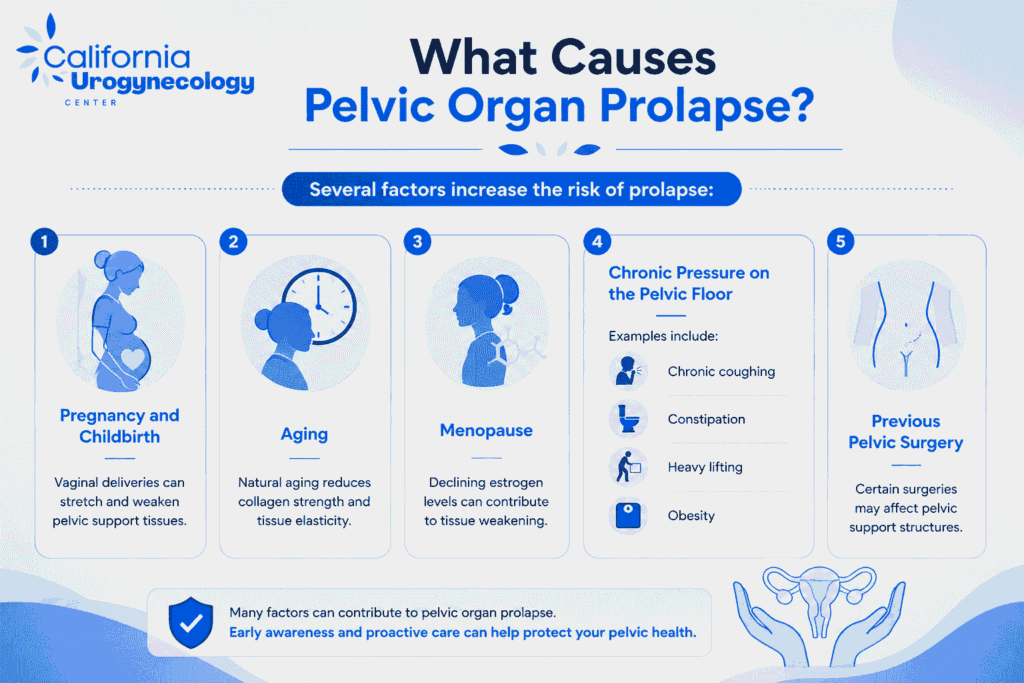
Pregnancy and Childbirth
Vaginal deliveries can stretch and weaken pelvic support tissues.
Aging
Natural aging reduces collagen strength and tissue elasticity.
Menopause
Declining estrogen levels can contribute to tissue weakening.
Chronic Pressure on the Pelvic Floor
Examples include:
- Chronic coughing
- Constipation
- Heavy lifting
- Obesity
Previous Pelvic Surgery
Certain surgeries may affect pelvic support structures.
When Is Pelvic Organ Prolapse Surgery Recommended?
Not every prolapse requires surgery.
Many women successfully manage symptoms using conservative treatments.
Surgery may be recommended when:
- Symptoms interfere with daily activities
- A vaginal bulge becomes bothersome
- Urinary symptoms persist
- Bowel dysfunction develops
- Pelvic pressure causes discomfort
- Non-surgical treatments fail to provide relief
Signs Surgery May Be Considered
✔ Feeling tissue protruding from the vagina
✔ Difficulty emptying the bladder
✔ Frequent urinary tract infections
✔ Chronic pelvic pressure
✔ Problems with bowel movements
✔ Reduced quality of life
Non-Surgical Treatments Usually Tried First
Before recommending surgery, providers often consider:
Pelvic Floor Physical Therapy
Targeted exercises strengthen pelvic support muscles.
Vaginal Pessary
A removable device placed inside the vagina to support prolapsed organs.
Lifestyle Changes
These may include:
- Weight management
- Treating constipation
- Smoking cessation
- Avoiding heavy lifting
For many women, these treatments provide meaningful symptom relief.
Types of Pelvic Organ Prolapse Surgery
Several surgical approaches are available depending on the type and severity of prolapse.
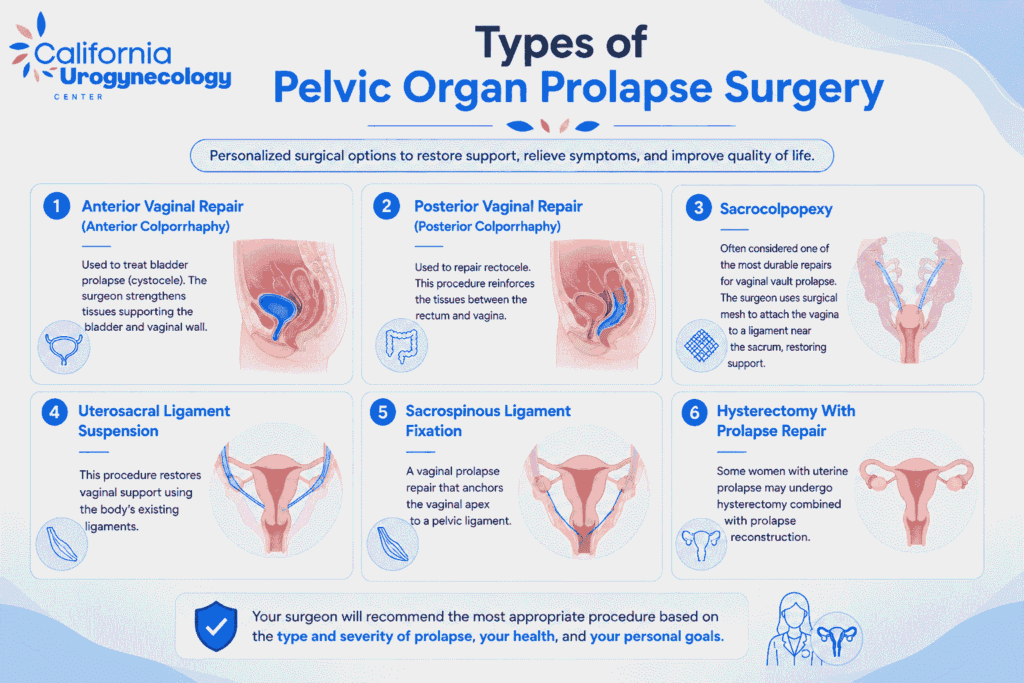
1. Anterior Vaginal Repair (Anterior Colporrhaphy)
Used to treat bladder prolapse (cystocele).
The surgeon strengthens tissues supporting the bladder and vaginal wall.
2. Posterior Vaginal Repair (Posterior Colporrhaphy)
Used to repair rectocele.
This procedure reinforces the tissues between the rectum and vagina.
3. Sacrocolpopexy
Often considered one of the most durable repairs for vaginal vault prolapse.
The surgeon uses surgical mesh to attach the vagina to a ligament near the sacrum, restoring support.
4. Uterosacral Ligament Suspension
This procedure restores vaginal support using the body’s existing ligaments.
5. Sacrospinous Ligament Fixation
A vaginal prolapse repair that anchors the vaginal apex to a pelvic ligament.
6. Hysterectomy With Prolapse Repair
Some women with uterine prolapse may undergo hysterectomy combined with prolapse reconstruction.
However, many modern procedures can preserve the uterus when appropriate.
Reconstructive vs. Obliterative Prolapse Surgery
Reconstructive Surgery
Rebuilds pelvic support while maintaining vaginal function.
Best for women who wish to remain sexually active.
Examples include:
- Sacrocolpopexy
- Colporrhaphy
- Uterosacral ligament suspension
Obliterative Surgery
Narrows or closes part of the vaginal canal to prevent prolapse recurrence.
Most commonly performed in women who no longer desire vaginal intercourse.
Example:
- Colpocleisis
Minimally Invasive Pelvic Organ Prolapse Surgery
Many prolapse procedures can now be performed using minimally invasive techniques.
These may include:
- Laparoscopic surgery
- Robotic-assisted surgery
- Vaginal surgery
Potential Benefits
- Smaller incisions
- Less postoperative pain
- Reduced blood loss
- Faster recovery
- Shorter hospital stays
Not every patient is a candidate, but minimally invasive options have expanded treatment choices considerably.
Benefits of Pelvic Organ Prolapse Surgery
Successful surgery can provide:
Physical Benefits
- Reduced vaginal bulging
- Improved bladder control
- Easier bowel movements
- Less pelvic pressure
Lifestyle Benefits
- Better sleep
- Increased activity levels
- Greater comfort during exercise
- Improved confidence
Quality of Life Improvements
Many women report significant improvement in daily functioning and overall well-being following successful prolapse repair.
Risks and Potential Complications
Like any surgical procedure, pelvic organ prolapse surgery carries potential risks.
Possible complications include:
- Infection
- Bleeding
- Blood clots
- Pain
- Urinary retention
- Recurrence of prolapse
- Injury to nearby organs
- Mesh-related complications (when mesh is used)
An experienced urogynecologist can help explain individual risks and expected outcomes.
What Is Recovery Like After Pelvic Organ Prolapse Surgery?
Recovery varies depending on the procedure performed.
Immediately After Surgery
Most patients experience:
- Mild discomfort
- Temporary swelling
- Activity restrictions
During the First Few Weeks
Patients are typically advised to:
- Avoid heavy lifting
- Limit strenuous exercise
- Prevent constipation
- Follow postoperative instructions carefully
Long-Term Recovery
Many women resume normal activities within several weeks, though complete healing may take several months.
Recovery timelines differ based on surgical complexity and overall health.
Success Rates of Pelvic Organ Prolapse Surgery
Most prolapse surgeries have high patient satisfaction rates.
Success depends on factors such as:
- Prolapse severity
- Surgical technique
- Patient health
- Weight management
- Smoking status
- Future pelvic floor strain
While surgery can provide long-lasting relief, no procedure can completely eliminate the possibility of recurrence.
How to Know if Pelvic Organ Prolapse Surgery Is Right for You
Surgery may be worth considering if:
You Have:
- Significant pelvic pressure
- Vaginal bulging
- Persistent urinary symptoms
- Difficulty with bowel movements
- Symptoms affecting daily life
You Have Tried:
- Pelvic floor therapy
- Pessary use
- Lifestyle modifications
You Want:
- More durable symptom relief
- Improved quality of life
- Better pelvic support
The decision should always be individualized and made in partnership with a qualified urogynecologist.
Key Takeaways
- Pelvic organ prolapse surgery repairs weakened pelvic support structures.
- Surgery is typically considered when symptoms affect daily life or conservative treatments fail.
- Multiple procedures are available depending on the type of prolapse.
- Minimally invasive techniques can reduce recovery time for many patients.
- Most women experience significant symptom improvement and better quality of life after surgery.
- Treatment decisions should be based on symptom severity, health status, and personal goals.
FAQs
Is pelvic organ prolapse surgery painful?
Most patients experience temporary discomfort after surgery, which is typically managed with medications and improves during recovery.
How long does pelvic organ prolapse surgery last?
The procedure itself may take one to several hours depending on the complexity and surgical approach.
Can pelvic organ prolapse come back after surgery?
Yes. Although surgery is often highly effective, recurrence is possible over time due to aging, tissue quality, or ongoing pelvic floor strain.
What is the recovery time for prolapse surgery?
Many women return to light activities within a few weeks, but complete healing may take several months.
Is pelvic organ prolapse surgery safe?
When performed by an experienced urogynecologist, prolapse surgery is generally considered safe, though all surgical procedures carry some risks.
Can prolapse be treated without surgery?
Yes. Pelvic floor therapy, pessary devices, and lifestyle modifications can successfully manage symptoms for many women.
Conclusion
Pelvic organ prolapse surgery is an effective treatment option for women whose symptoms interfere with comfort, daily activities, or quality of life. Modern surgical techniques offer a range of solutions, from minimally invasive repairs to more comprehensive reconstructive procedures, allowing treatment to be tailored to each woman’s needs.
Find Expert Pelvic Organ Prolapse Care in Riverside
Living with pelvic organ prolapse can be frustrating, but effective treatment is available. At California Urogynecology Center in Riverside, Dr. Bilal Kaaki specializes in diagnosing and treating pelvic organ prolapse in Riverside using the latest surgical and minimally invasive techniques.
Contact our office today to schedule a consultation and discover a personalized treatment plan designed to help you return to the activities you enjoy with greater comfort and confidence.