
Pelvic organ prolapse can make everyday activities uncomfortable and affect a woman’s confidence, mobility, and quality of life. Many women experience symptoms such as pelvic pressure, a vaginal bulge, urinary problems, or difficulty with bowel movements. While lifestyle changes, pelvic floor exercises, and pessaries may help in mild cases, surgery is often recommended for moderate to severe prolapse.
Among the available surgical options, sacrocolpopexy for pelvic organ prolapse is considered one of the most effective and durable procedures. It restores the normal position of the pelvic organs while preserving vaginal function, making it a preferred choice for many women seeking long lasting relief.
This guide explains how sacrocolpopexy works, who may benefit from it, what to expect during recovery, and why it remains one of the leading treatments for pelvic organ prolapse.
What Is Sacrocolpopexy?
Sacrocolpopexy is a surgical procedure used to correct pelvic organ prolapse, particularly prolapse involving the top of the vagina after a hysterectomy or uterine prolapse requiring surgical repair.
During the procedure, the surgeon attaches a surgical mesh from the top of the vagina to the sacrum, which is the triangular bone at the base of the spine. This provides strong support that restores the pelvic organs to their normal position.
Today, sacrocolpopexy is commonly performed using minimally invasive techniques such as laparoscopic or robotic-assisted surgery. These approaches generally result in smaller incisions, less discomfort, and faster recovery compared to traditional open surgery.
Understanding Pelvic Organ Prolapse
Pelvic organ prolapse occurs when the muscles, ligaments, and connective tissues supporting the pelvic organs become weakened. As support decreases, organs such as the bladder, uterus, rectum, or vaginal vault may descend into or outside the vaginal canal.
Common causes include:
- Pregnancy and vaginal childbirth
- Aging
- Menopause
- Chronic constipation
- Obesity
- Heavy lifting over many years
- Previous pelvic surgery
- Genetic connective tissue weakness
Common Symptoms
Symptoms vary depending on the severity of the prolapse and the organs involved.
They may include:
- Feeling of vaginal pressure or heaviness
- A visible or noticeable vaginal bulge
- Difficulty emptying the bladder
- Frequent urinary tract infections
- Urinary leakage
- Constipation or difficulty with bowel movements
- Pain during sexual intercourse
- Lower back discomfort
- Feeling that something is falling out of the vagina
Who Is a Good Candidate for Sacrocolpopexy?
Sacrocolpopexy is generally recommended for women with moderate to severe pelvic organ prolapse who want a long lasting surgical repair.
You may be a candidate if you:
- Have symptomatic vaginal vault prolapse
- Have uterine prolapse requiring surgical treatment
- Have experienced recurrence after previous prolapse surgery
- Want to preserve vaginal length and sexual function
- Are healthy enough for surgery
A urogynecologist or pelvic reconstructive surgeon will evaluate your medical history, symptoms, physical examination, and imaging studies when necessary to determine the most appropriate treatment.
How the Sacrocolpopexy Procedure Is Performed
The exact surgical technique depends on your anatomy and overall health, but the general steps include:
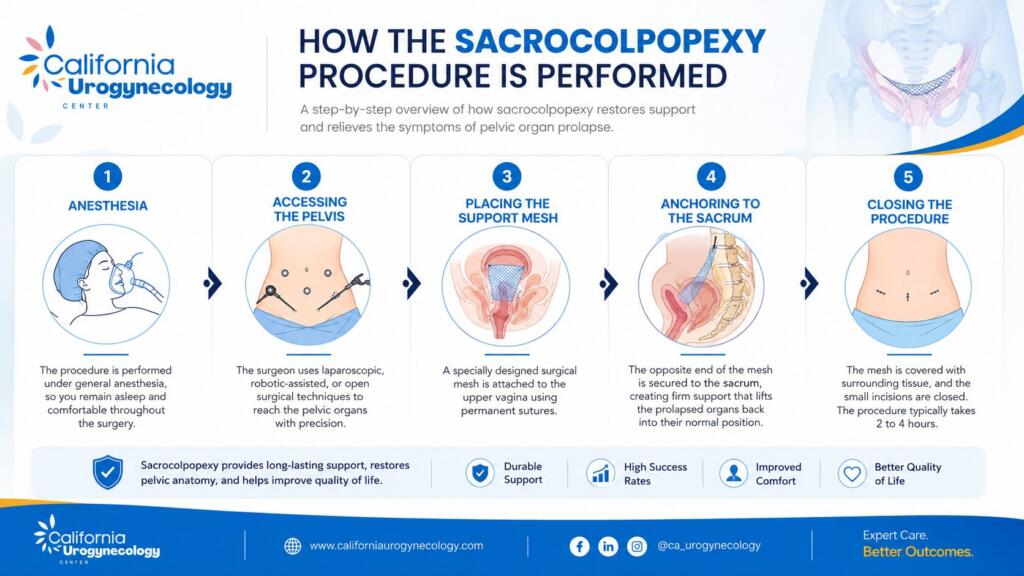
1. Anesthesia
The procedure is performed under general anesthesia, so you remain asleep throughout the surgery.
2. Accessing the Pelvis
The surgeon uses laparoscopic, robotic-assisted, or open surgical techniques to reach the pelvic organs.
3. Placing the Support Mesh
A specially designed surgical mesh is attached to the upper vagina using permanent sutures.
4. Anchoring to the Sacrum
The opposite end of the mesh is secured to the sacrum, creating firm support that lifts the prolapsed organs back into their normal position.
5. Closing the Procedure
The mesh is covered with surrounding tissue, and the small incisions are closed.
The procedure typically takes two to four hours, depending on the complexity of the prolapse and whether additional procedures are performed.
Benefits of Sacrocolpopexy
Sacrocolpopexy is widely recognized as one of the most successful surgical treatments for pelvic organ prolapse.
Its benefits include:
- Excellent long term success rates
- Restoration of normal pelvic anatomy
- Reduced sensation of pelvic pressure
- Improved bladder and bowel function
- Better quality of life
- Preservation of vaginal length
- Improved sexual function for many women
- Lower recurrence rates compared to some vaginal prolapse repairs
- Minimally invasive options with faster recovery
Because of these advantages, sacrocolpopexy is often considered the gold standard treatment for apical pelvic organ prolapse.
Recovery After Sacrocolpopexy
Recovery varies from person to person, but most women gradually return to normal activities within several weeks.
During the First Few Days
Patients may experience:
- Mild abdominal soreness
- Fatigue
- Temporary bladder discomfort
- Light vaginal spotting
Most patients stay in the hospital for one or two days after minimally invasive surgery, although some may return home sooner depending on their recovery.
During the First Six Weeks
Patients are generally advised to:
- Avoid heavy lifting
- Walk daily to improve circulation
- Stay hydrated
- Prevent constipation
- Avoid strenuous exercise
- Avoid sexual intercourse until cleared by the surgeon
Long Term Recovery
Most women return to work within two to six weeks depending on their occupation. Complete healing usually occurs over several months as tissues strengthen around the surgical repair.
Possible Risks and Complications
Like any surgery, sacrocolpopexy carries certain risks, although serious complications are relatively uncommon when performed by an experienced pelvic reconstructive surgeon.
Potential risks include:
- Infection
- Bleeding
- Injury to surrounding organs
- Blood clots
- Temporary urinary retention
- Mesh exposure or erosion
- Recurrence of prolapse
- Pain during intercourse
Your surgeon will discuss these risks along with strategies used to reduce them before surgery.
Sacrocolpopexy vs Other Prolapse Surgeries
Several surgical procedures can treat pelvic organ prolapse. The right option depends on your anatomy, age, health, and treatment goals.
| Procedure | Primary Use | Key Advantage |
|---|---|---|
| Sacrocolpopexy | Vaginal vault or apical prolapse | Excellent long term durability |
| Anterior colporrhaphy | Bladder prolapse | Repairs weakened front vaginal wall |
| Posterior colporrhaphy | Rectocele | Improves bowel support |
| Sacrospinous ligament fixation | Vaginal vault prolapse | Vaginal approach without abdominal incisions |
| Uterosacral ligament suspension | Apical prolapse | Uses native tissues without mesh |
Your surgeon will recommend the most appropriate procedure based on your specific condition rather than using a one size fits all approach.
Tips for a Successful Recovery
Following postoperative instructions can improve healing and reduce the chance of recurrence.
Helpful tips include:
- Follow all activity restrictions.
- Eat a high fiber diet.
- Drink plenty of water.
- Avoid smoking.
- Maintain a healthy body weight.
- Perform pelvic floor exercises if recommended.
- Attend all follow up appointments.
- Report fever, severe pain, heavy bleeding, or difficulty urinating promptly.
FQAs
How successful is sacrocolpopexy?
Sacrocolpopexy has consistently demonstrated high long term success rates for correcting pelvic organ prolapse, with many women experiencing lasting symptom relief for years.
Is mesh always used during sacrocolpopexy?
Yes. The procedure typically uses a surgical mesh specifically designed to provide durable support. Your surgeon will explain the benefits and potential risks associated with mesh use.
Can pelvic organ prolapse come back after surgery?
Although recurrence is possible, sacrocolpopexy generally has lower recurrence rates than many other prolapse repair procedures.
Will I need physical therapy after surgery?
Some women benefit from pelvic floor physical therapy during recovery, especially if muscle weakness or pelvic floor dysfunction contributed to the prolapse.
How long before I can exercise again?
Light walking is encouraged soon after surgery. More strenuous activities and heavy lifting are usually postponed for at least six weeks or until your surgeon confirms that healing is progressing well.
Final Thoughts
Sacrocolpopexy for pelvic organ prolapse is one of the most reliable and effective surgical options for women seeking lasting relief from bothersome prolapse symptoms. By restoring normal pelvic support, improving daily comfort, and preserving vaginal function, this procedure can significantly enhance quality of life.
If pelvic organ prolapse is affecting your daily activities, work, or personal relationships, consulting an experienced urogynecologist can help you understand your treatment options and determine whether sacrocolpopexy is the right solution for your individual needs.
Take the Next Step Toward Lasting Prolapse Relief
Pelvic organ prolapse doesn’t have to interfere with your daily life. At California Urogynecology Center, we provide advanced Pelvic Organ Prolapse Treatment in Riverside, CA, using personalized treatment plans that may include conservative therapies and minimally invasive surgical options such as sacrocolpopexy. Led by Dr. Bilal Kaaki, our experienced team is dedicated to restoring your comfort, confidence, and quality of life. Schedule your consultation today and take the first step toward lasting pelvic health.