
Pelvic organ prolapse is a common condition that affects many women, particularly after childbirth, menopause, or as part of the natural aging process. While mild cases can often be managed with pelvic floor exercises, lifestyle changes, or a pessary, there are situations where conservative treatments are no longer enough.
Understanding the signs that indicate a need for Pelvic Organ Prolapse Surgery can help you make informed decisions about your health and quality of life. If symptoms are interfering with daily activities, causing discomfort, or continuing to worsen, surgical treatment may be worth discussing with a urogynecologist.
This guide explains when surgery may be recommended, what symptoms should not be ignored, and what you can expect when considering treatment options.
What Is Pelvic Organ Prolapse Surgery?
Pelvic Organ Prolapse Surgery refers to procedures designed to restore pelvic organs to their normal position when weakened muscles and connective tissues can no longer provide adequate support.
These surgeries may address:
- Bladder prolapse (cystocele)
- Uterine prolapse
- Rectocele
- Vaginal vault prolapse
- Enterocele
The goal of surgery is to improve pelvic support, relieve symptoms, and restore quality of life.
Quick Answer
You may need Pelvic Organ Prolapse Surgery if prolapse symptoms significantly affect your daily activities, do not improve with conservative treatment, cause urinary or bowel dysfunction, or create persistent discomfort and pressure.
Read More: What Is Pelvic Organ Prolapse Surgery?
Understanding When Surgery Becomes an Option
Not every prolapse requires surgery.
Many women successfully manage mild to moderate prolapse through:
- Pelvic floor physical therapy
- Kegel exercises
- Weight management
- Lifestyle modifications
- Pessary use
However, surgery may become appropriate when symptoms become severe, progressive, or disruptive to everyday life.
10 Signs You May Need Pelvic Organ Prolapse Surgery
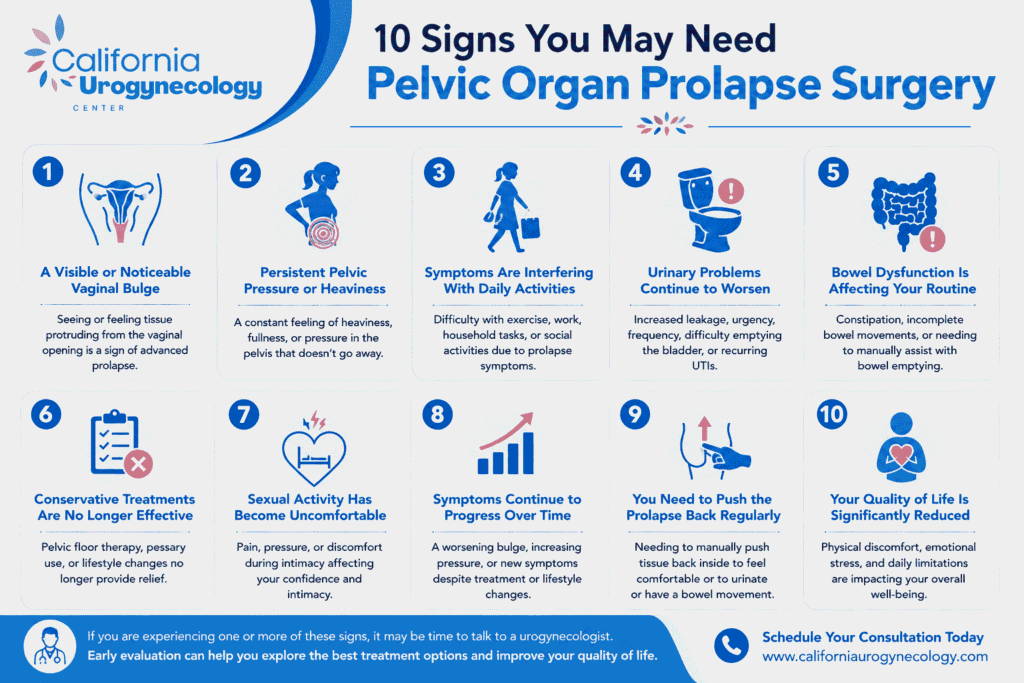
1. A Visible or Noticeable Vaginal Bulge
One of the most common signs of advanced prolapse is seeing or feeling tissue protruding from the vaginal opening.
You may notice:
- A bulge while bathing
- Tissue protruding after standing for long periods
- Increased protrusion at the end of the day
While not every vaginal bulge requires surgery, a significant protrusion often indicates more advanced pelvic support issues.
2. Persistent Pelvic Pressure or Heaviness
Many women describe prolapse as feeling like:
- Something is falling out
- A heavy sensation in the pelvis
- Constant vaginal pressure
If this feeling persists despite conservative treatments, surgery for pelvic organ prolapse may provide more effective relief.
3. Symptoms Are Interfering With Daily Activities
A key factor in deciding whether surgery is needed is how much prolapse affects your quality of life.
Examples include:
- Difficulty exercising
- Discomfort while walking
- Challenges with household tasks
- Avoiding social activities
- Reduced ability to work comfortably
When symptoms begin limiting normal activities, treatment goals often shift toward long-term correction.
4. Urinary Problems Continue to Worsen
Pelvic organ prolapse can affect bladder function.
Warning signs include:
- Difficulty emptying the bladder
- Frequent urination
- Urinary urgency
- Recurrent urinary tract infections
- Urinary retention
If bladder symptoms become significant, surgical evaluation may be recommended.
5. Bowel Dysfunction Is Affecting Your Routine
Some women with prolapse experience bowel-related symptoms such as:
- Chronic constipation
- Difficulty emptying the rectum
- Need to manually support the vaginal wall during bowel movements
- Sensation of incomplete evacuation
These symptoms can have a major impact on comfort and quality of life and may indicate the need for surgical correction.
6. Conservative Treatments Are No Longer Effective
Many patients try nonsurgical approaches first.
If you’ve already attempted:
- Pelvic floor therapy
- Kegel exercises
- Pessary management
- Lifestyle changes
and symptoms continue to worsen, Pelvic Organ Prolapse Surgery may become the next logical treatment option.
7. Sexual Activity Has Become Uncomfortable
Advanced prolapse can cause:
- Vaginal discomfort
- Pressure during intimacy
- Reduced confidence
- Difficulty with sexual activity
Addressing prolapse may help restore comfort and improve overall well-being.
8. Symptoms Continue to Progress Over Time
Pelvic organ prolapse often develops gradually.
Signs of progression include:
- Increasing bulge size
- More frequent pressure sensations
- New bladder symptoms
- New bowel symptoms
A worsening condition despite treatment often warrants consultation with a specialist.
9. You Need to Push the Prolapse Back Regularly
Some women find themselves manually repositioning prolapsed tissue throughout the day.
This often indicates more advanced prolapse and may suggest that nonsurgical management is becoming less effective.
10. Your Quality of Life Is Significantly Reduced
Perhaps the most important sign is how prolapse affects your overall well-being.
If symptoms are causing:
- Physical discomfort
- Emotional distress
- Sleep disruption
- Reduced mobility
- Loss of confidence
then discussing surgical options may be appropriate.
When Surgery May Not Be Necessary
Surgery is not always the best first step.
Women with mild symptoms may achieve excellent results through conservative management.
Nonsurgical Treatment Options
| Treatment | Purpose |
|---|---|
| Pelvic Floor Therapy | Strengthens support muscles |
| Kegel Exercises | Improves pelvic floor function |
| Pessary Device | Provides internal support |
| Weight Management | Reduces pelvic pressure |
| Lifestyle Modifications | Helps prevent symptom progression |
An individualized evaluation helps determine the most appropriate treatment plan.
Types of Female Pelvic Organ Prolapse Surgery
Several surgical approaches are available depending on the type and severity of prolapse.
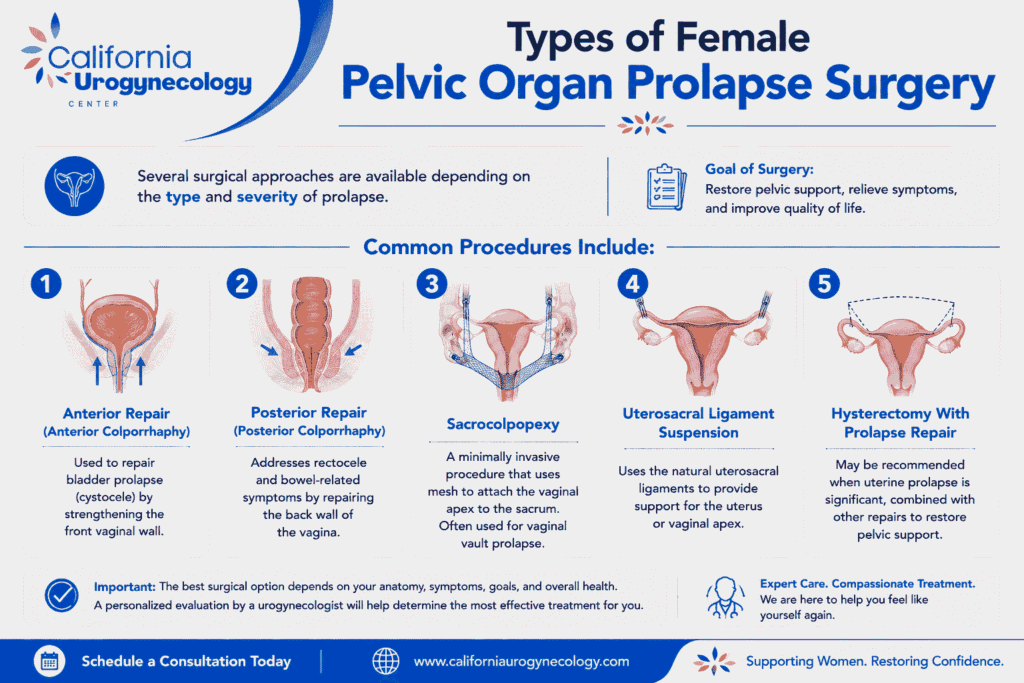
Common Procedures Include:
Anterior Repair (Anterior Colporrhaphy)
Used to repair bladder prolapse.
Posterior Repair (Posterior Colporrhaphy)
Addresses rectocele and bowel-related symptoms.
Sacrocolpopexy
A minimally invasive procedure often used for vaginal vault prolapse.
Uterosacral Ligament Suspension
Provides support for the uterus or vaginal apex.
Hysterectomy With Prolapse Repair
May be considered when uterine prolapse is significant.
The best option depends on your anatomy, symptoms, goals, and overall health.
What to Expect During Recovery From Pelvic Organ Prolapse Surgery
Understanding recovery from pelvic organ prolapse surgery helps patients prepare for a smoother healing process.
General Recovery Timeline
| Recovery Stage | Typical Timeline |
| Initial Recovery | 1 to 2 weeks |
| Return to Light Activities | 2 to 6 weeks |
| Activity Restrictions | Up to 6 weeks |
| Full Recovery | 6 to 12 weeks |
Your surgeon will provide personalized recommendations based on the procedure performed.
Recovery Tips
- Avoid heavy lifting
- Follow activity restrictions
- Stay hydrated
- Prevent constipation
- Attend follow-up appointments
- Resume exercise only when approved
Key Questions to Ask Your Surgeon
Before scheduling female pelvic organ prolapse surgery, consider asking:
- What type of prolapse do I have?
- Is surgery my best option?
- What nonsurgical treatments remain available?
- What procedure do you recommend and why?
- What are the benefits and risks?
- How long is recovery?
- What results can I realistically expect?
These discussions help ensure informed decision-making.
Key Takeaways
- Not all prolapse requires surgery.
- Pelvic Organ Prolapse Surgery is often considered when symptoms significantly affect quality of life.
- Persistent pelvic pressure, vaginal bulging, urinary problems, bowel dysfunction, and failed conservative treatment are common signs surgery may be needed.
- Several surgical options are available depending on the type and severity of prolapse.
- Proper evaluation by a urogynecology specialist is essential for determining the most effective treatment plan.
FAQs
How do I know if my prolapse is severe enough for surgery?
Severity is based on symptoms, physical examination findings, and the impact on your daily life. Significant discomfort, worsening symptoms, or functional problems may indicate the need for surgery.
Can pelvic organ prolapse be treated without surgery?
Yes. Many women benefit from pelvic floor physical therapy, pessaries, lifestyle changes, and pelvic floor exercises.
Is pelvic organ prolapse surgery successful?
Most women experience substantial symptom improvement and better quality of life after appropriately selected prolapse surgery.
How long does recovery from pelvic organ prolapse surgery take?
Most patients recover within 6 to 12 weeks, although timelines vary depending on the specific procedure and individual healing.
Can prolapse come back after surgery?
Recurrence is possible, but maintaining pelvic floor health and following post-operative recommendations can help reduce the risk.
What type of doctor performs pelvic organ prolapse surgery?
A urogynecologist or female pelvic medicine and reconstructive surgery specialist is specifically trained to diagnose and treat pelvic organ prolapse.
Conclusion
Living with pelvic organ prolapse can be frustrating, especially when symptoms begin affecting your comfort, confidence, and daily activities. While many women find relief through conservative treatments, there are situations where Pelvic Organ Prolapse Surgery becomes the most effective option for restoring pelvic support and improving quality of life.
If you are experiencing persistent symptoms, worsening prolapse, or concerns about treatment options, seeking a professional evaluation is an important next step.
Expert Pelvic Organ Prolapse Care in Riverside
At California Urogynecology Center, Dr. Bilal Kaaki provides comprehensive evaluation and advanced treatment options for pelvic organ prolapse. Whether you are exploring conservative therapies or considering surgery for pelvic organ prolapse, a personalized treatment plan can help you find the right path forward. Learn more about your treatment options and schedule a consultation.