
Pelvic organ prolapse can range from a mild inconvenience to a condition that significantly impacts daily life. Many women diagnosed with prolapse wonder whether surgery is inevitable or if non-surgical treatments can provide enough relief. The answer depends on several factors, including symptom severity, the type of prolapse, overall health, and personal treatment goals.
While many women successfully manage prolapse with pelvic floor therapy, lifestyle changes, or pessaries, there are situations where Pelvic Organ Prolapse Surgery becomes the most effective treatment option. Understanding when surgery may be recommended can help you make informed decisions about your pelvic health.
What Is Pelvic Organ Prolapse?
Pelvic organ prolapse occurs when the muscles, ligaments, and connective tissues supporting the pelvic organs weaken or stretch. As support structures lose strength, one or more pelvic organs may descend into or through the vaginal canal.
Common types of prolapse include:
- Bladder prolapse (cystocele)
- Uterine prolapse
- Rectal prolapse into the vagina (rectocele)
- Small bowel prolapse (enterocele)
- Vaginal vault prolapse after hysterectomy
Read More: What Is Pelvic Organ Prolapse Surgery?
Quick Answer: When Is Surgery Needed?
Pelvic Organ Prolapse Surgery is typically considered when symptoms become bothersome, affect quality of life, and do not improve with conservative treatments such as pelvic floor therapy or pessary use.
Surgery may also be recommended when prolapse interferes with bladder function, bowel movements, sexual activity, or daily activities.
Signs That Surgery May Be Necessary
Not every prolapse requires surgery. Many women with mild prolapse experience manageable symptoms and respond well to non-surgical treatment.
However, certain symptoms may indicate it’s time to discuss surgical options with a urogynecologist.
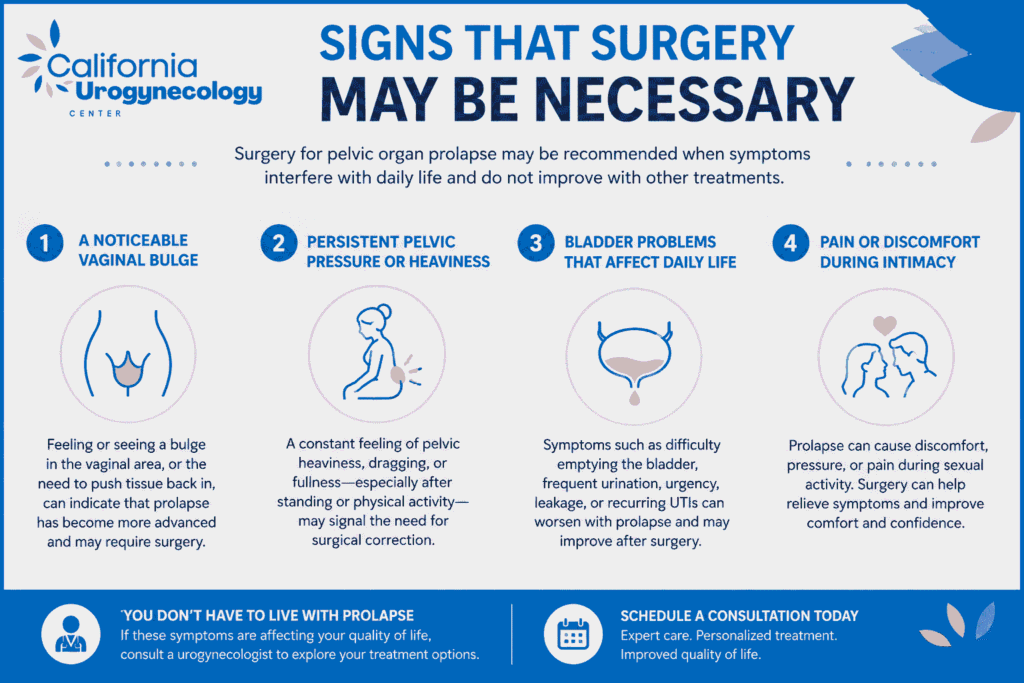
1. A Noticeable Vaginal Bulge
One of the most common reasons women pursue surgery is the sensation or visible appearance of tissue bulging from the vaginal opening.
Women often describe:
- Feeling like something is “falling out”
- Seeing or feeling a protrusion
- Needing to push tissue back inside
When prolapse becomes physically noticeable and uncomfortable, surgery may provide more durable symptom relief.
2. Persistent Pelvic Pressure or Heaviness
Many patients describe a dragging sensation in the pelvis that worsens throughout the day.
Symptoms may include:
- Pelvic fullness
- Lower abdominal pressure
- Discomfort during prolonged standing
- Symptoms worsening after lifting or exercise
If these symptoms significantly affect daily activities, surgery for pelvic organ prolapse may be considered.
3. Bladder Problems That Affect Daily Life
Advanced prolapse can alter the position of the bladder and urethra, leading to urinary symptoms such as:
- Difficulty emptying the bladder
- Frequent urination
- Urinary urgency
- Recurrent urinary tract infections
- Urinary leakage
In some cases, correcting the prolapse surgically can improve bladder function and reduce symptoms.
4. Bowel Function Issues
Rectocele and other forms of posterior prolapse can interfere with normal bowel movements.
Women may experience:
- Constipation
- Incomplete emptying
- Straining during bowel movements
- The need to apply pressure to the vagina to facilitate stool passage
When these symptoms become chronic, female pelvic organ prolapse surgery may be recommended.
5. Pain or Discomfort During Intimacy
Prolapse can affect sexual function and comfort.
Some women experience:
- Vaginal pressure during intercourse
- Reduced confidence
- Physical discomfort
- Emotional distress related to prolapse symptoms
Treatment decisions should consider both physical and emotional quality-of-life factors.
When Non-Surgical Treatments May Be Enough
Before recommending Pelvic Organ Prolapse Surgery, specialists often evaluate conservative options.
Common Non-Surgical Treatments
| Treatment | Purpose |
|---|---|
| Pelvic floor physical therapy | Strengthens supportive muscles |
| Kegel exercises | Improves pelvic floor function |
| Pessary device | Supports prolapsed organs |
| Weight management | Reduces pelvic pressure |
| Constipation management | Minimizes straining |
| Lifestyle modifications | Helps prevent worsening symptoms |
Many women achieve meaningful symptom improvement without surgery.
Who Is a Good Candidate for Pelvic Organ Prolapse Surgery?
Surgery may be appropriate for women who:
- Have moderate to severe prolapse
- Experience symptoms affecting daily activities
- Have failed conservative treatments
- Desire long-term anatomical correction
- Are healthy enough for surgery
- Understand the benefits and limitations of surgical treatment
The decision is highly individualized and should be made after consultation with an experienced urogynecologist.
Types of Pelvic Organ Prolapse Surgery
Several surgical approaches are available depending on the type and severity of prolapse.
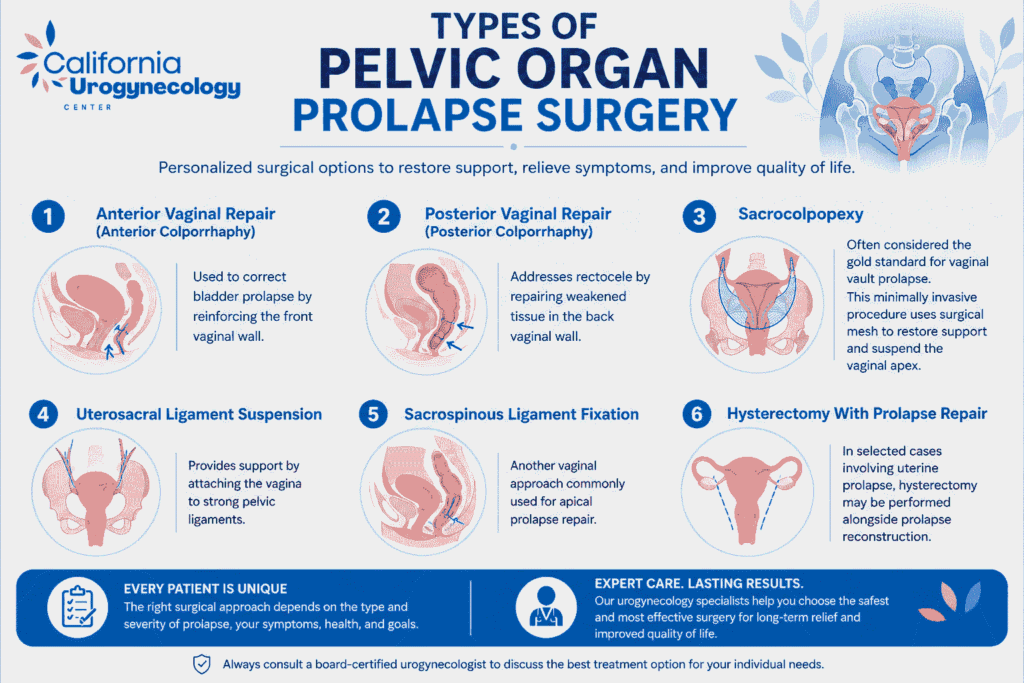
Anterior Vaginal Repair (Anterior Colporrhaphy)
Used to correct bladder prolapse by reinforcing the front vaginal wall.
Posterior Vaginal Repair (Posterior Colporrhaphy)
Addresses rectocele by repairing weakened tissue in the back vaginal wall.
Sacrocolpopexy
Often considered the gold standard for vaginal vault prolapse.
This minimally invasive procedure uses surgical mesh to restore support and suspend the vaginal apex.
Uterosacral Ligament Suspension
Provides support by attaching the vagina to strong pelvic ligaments.
Sacrospinous Ligament Fixation
Another vaginal approach commonly used for apical prolapse repair.
Hysterectomy With Prolapse Repair
In selected cases involving uterine prolapse, hysterectomy may be performed alongside prolapse reconstruction.
Benefits of Pelvic Organ Prolapse Surgery
For appropriate candidates, surgery can offer significant improvements.
Potential Benefits
- Reduced vaginal bulging
- Improved bladder function
- Better bowel function
- Increased physical comfort
- Improved sexual function
- Enhanced quality of life
- Greater confidence during daily activities
Many women report substantial symptom relief following successful Pelvic Organ Prolapse Surgery.
What Many Women Don’t Realize About Timing
One commonly overlooked aspect of prolapse treatment is that surgery is not based solely on the prolapse stage.
Some women with advanced prolapse have few symptoms and do not need surgery.
Meanwhile, women with moderate prolapse may experience severe quality-of-life limitations that justify surgical intervention.
The most important factor is often how much the prolapse affects your life, not simply what appears on an examination.
Recovery From Pelvic Organ Prolapse Surgery
Understanding recovery expectations helps patients prepare for a successful outcome.
Typical Recovery Timeline
| Recovery Phase | What to Expect |
| Week 1-2 | Rest, light walking, symptom improvement begins |
| Week 3-6 | Gradual increase in activity |
| Week 6-8 | Follow-up evaluation |
| Month 2-3 | Return to most normal activities |
| Month 3-6 | Continued healing and strengthening |
Recovery from pelvic organ prolapse surgery varies based on procedure type, overall health, and adherence to postoperative instructions.
Recovery Tips
- Avoid heavy lifting
- Follow activity restrictions
- Prevent constipation
- Attend follow-up visits
- Gradually resume exercise
Questions to Ask Your Surgeon
Before proceeding with surgery for pelvic organ prolapse, consider asking:
- What type of prolapse do I have?
- What surgical options are available?
- What are the expected success rates?
- What are the risks and benefits?
- How long is recovery?
- Will surgery affect sexual function?
- Could prolapse return in the future?
Being informed helps ensure confidence in your treatment decision.
Key Takeaways
- Not all prolapse requires surgery.
- Pelvic Organ Prolapse Surgery is generally recommended when symptoms significantly impact quality of life.
- Vaginal bulging, bladder dysfunction, bowel issues, and persistent discomfort are common reasons surgery is considered.
- Conservative treatments should often be explored first.
- Multiple surgical options exist depending on the type of prolapse.
- Recovery from pelvic organ prolapse surgery is typically gradual and requires adherence to postoperative instructions.
Frequently Asked Questions
Is pelvic organ prolapse surgery always necessary?
No. Many women manage prolapse successfully with pelvic floor therapy, pessaries, and lifestyle modifications. Surgery is usually reserved for bothersome or advanced symptoms.
What stage of prolapse requires surgery?
There is no specific stage that automatically requires surgery. Treatment decisions are based primarily on symptom severity and quality-of-life impact.
How successful is female pelvic organ prolapse surgery?
Success rates vary by procedure, but many prolapse repairs provide long-term symptom relief and significant improvements in quality of life.
Can prolapse come back after surgery?
Yes. While surgery can be highly effective, recurrence is possible. Maintaining pelvic floor health and following medical recommendations may help reduce risk.
How painful is recovery from pelvic organ prolapse surgery?
Most patients experience manageable discomfort that improves gradually over several weeks. Pain management strategies are provided by the surgical team.
How long does recovery from pelvic organ prolapse surgery take?
Most women resume many normal activities within 6 to 8 weeks, although complete healing may continue for several months.
Conclusion
Pelvic organ prolapse can affect comfort, confidence, bladder function, bowel health, and overall quality of life. While many women benefit from conservative treatments, there comes a point when symptoms become too disruptive to ignore. When prolapse interferes with daily activities, causes significant discomfort, or fails to improve with non-surgical therapies, Pelvic Organ Prolapse Surgery may offer the most effective path toward lasting relief.
If you’re experiencing symptoms of pelvic organ prolapse and want to understand whether surgery is the right option, consulting with an experienced urogynecology specialist can help you explore personalized treatment solutions based on your goals, symptoms, and lifestyle.
Expert Pelvic Organ Prolapse Care in Riverside
At California Urogynecology Center, Dr. Bilal Kaaki provides comprehensive evaluation and advanced treatment options for pelvic organ prolapse Surgery, including both conservative therapies and surgical solutions. If prolapse symptoms are affecting your quality of life, schedule a consultation to discuss the most appropriate treatment plan for your needs.