
Vaginal vault prolapse can significantly affect comfort, mobility, bladder function, and quality of life. Many women experience pressure, a vaginal bulge, urinary symptoms, or discomfort after a hysterectomy and may not realize that these symptoms can be caused by a loss of support at the top of the vagina. When symptoms become severe or interfere with daily activities, vaginal vault prolapse surgery treatment may provide lasting relief and restore pelvic support.
Modern surgical techniques are designed to correct the prolapse, improve function, and help women return to normal activities with greater confidence. Understanding your treatment options, recovery process, and expected outcomes can help you make informed decisions about your pelvic health.
What Is Vaginal Vault Prolapse?
Vaginal vault prolapse occurs when the upper portion of the vagina loses its normal support and drops downward into the vaginal canal. This condition most commonly develops after a hysterectomy because the uterus no longer provides structural support, although not every woman who has a hysterectomy will experience prolapse.
The pelvic floor is made up of muscles, ligaments, and connective tissues that support the bladder, uterus, vagina, and rectum. When these structures weaken, pelvic organs can shift out of their normal position.
Vaginal vault prolapse is a type of pelvic organ prolapse and may occur alongside:
- Bladder prolapse (cystocele)
- Rectocele
- Enterocele
- Small bowel prolapse
- Weakness affecting multiple pelvic structures
In some women, more than one organ is involved, which is why the term Prolapsed Pelvic Organs surgery is sometimes used when discussing procedures that repair multiple areas of pelvic support.
Symptoms of Vaginal Vault Prolapse
Symptoms can range from mild to severe depending on the extent of the prolapse.
Common symptoms include:
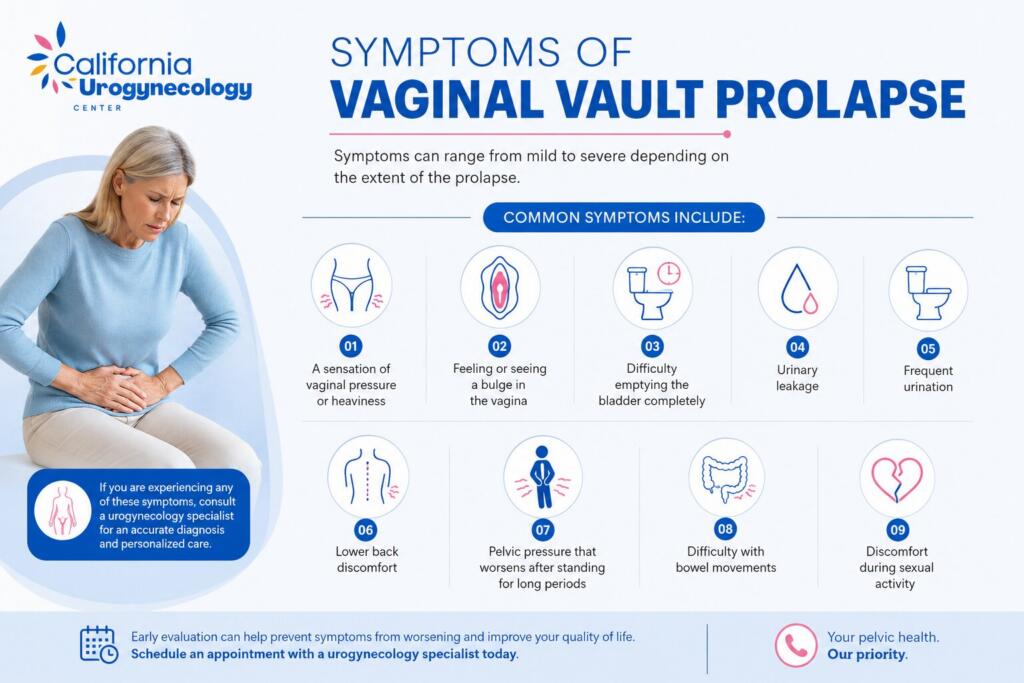
- A sensation of vaginal pressure or heaviness
- Feeling or seeing a bulge in the vagina
- Difficulty emptying the bladder completely
- Urinary leakage
- Frequent urination
- Lower back discomfort
- Pelvic pressure that worsens after standing for long periods
- Difficulty with bowel movements
- Discomfort during sexual activity
Symptoms often become more noticeable as the day progresses because gravity places additional strain on weakened pelvic tissues.
What Causes Vaginal Vault Prolapse?
Several factors can increase the risk of developing vaginal vault prolapse:
| Risk Factor | How It Contributes |
|---|---|
| Hysterectomy | Removes natural uterine support structures |
| Aging | Connective tissues naturally weaken over time |
| Menopause | Lower estrogen levels may affect tissue strength |
| Childbirth | Vaginal deliveries can stretch pelvic muscles and ligaments |
| Chronic constipation | Repeated straining increases pelvic pressure |
| Obesity | Extra abdominal pressure places stress on pelvic support structures |
| Heavy lifting | Frequent lifting can contribute to pelvic floor weakening |
| Chronic coughing | Persistent pressure can weaken supportive tissues |
Understanding these risk factors may help prevent worsening symptoms and guide treatment decisions.
When Is Surgery Recommended?
Not every prolapse requires surgery. Mild prolapse may be managed with observation, pelvic floor therapy, lifestyle changes, or a pessary.
Surgery is typically considered when:
- Symptoms affect daily activities.
- Conservative treatments have not provided relief.
- The prolapse is severe.
- Urinary or bowel function is significantly impacted.
- The prolapse repeatedly returns.
- Quality of life is declining because of discomfort or limitations.
The decision to undergo surgery should be based on symptom severity, overall health, personal goals, and a thorough evaluation by a urogynecologist.
Types of Vaginal Vault Prolapse Surgery Treatment
There is no single procedure that is best for every patient. Treatment is individualized according to anatomy, severity, previous surgeries, and patient preferences.
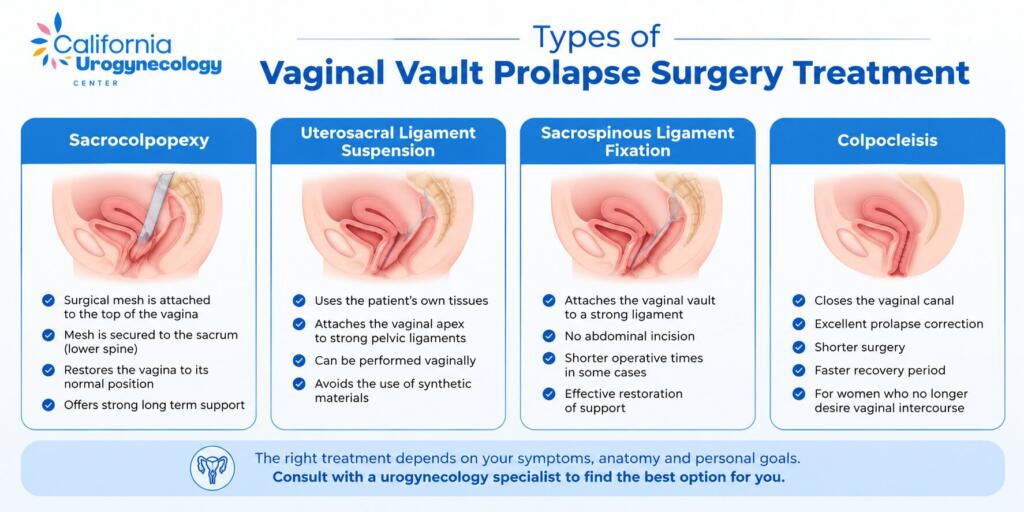
Sacrocolpopexy
Sacrocolpopexy is often considered one of the most durable surgical options for vaginal vault prolapse.
During the procedure:
- Surgical mesh is attached to the top of the vagina.
- The mesh is secured to the sacrum, which is part of the lower spine.
- This restores the vagina to its normal anatomical position.
Benefits may include:
- Strong long term support
- Lower recurrence rates
- Preservation of vaginal length
- Excellent success rates in appropriately selected patients
Many surgeons now perform this procedure using minimally invasive laparoscopic or robotic techniques.
Uterosacral Ligament Suspension
This procedure uses the patient’s own tissues rather than mesh.
The surgeon attaches the vaginal apex to strong pelvic ligaments to provide support. It can often be performed vaginally and avoids the use of synthetic materials.
Sacrospinous Ligament Fixation
Sacrospinous ligament fixation is another vaginal approach that attaches the vaginal vault to a strong ligament within the pelvis.
Potential advantages include:
- No abdominal incision
- Shorter operative times in some cases
- Effective restoration of support
Colpocleisis
For women who no longer desire vaginal intercourse, colpocleisis may be an option.
This procedure closes the vaginal canal and provides excellent prolapse correction with a shorter surgery and recovery period.
Prolapsed Pelvic Organs Surgery for Multiple Compartments
When prolapse affects the bladder, rectum, and vaginal vault simultaneously, surgeons may perform Prolapsed Pelvic Organs surgery to repair multiple areas during the same operation. Addressing all affected compartments can reduce symptoms and improve long term outcomes.
Minimally Invasive Surgery vs Traditional Surgery
| Feature | Minimally Invasive Surgery | Traditional Open Surgery |
|---|---|---|
| Incision size | Small | Larger |
| Hospital stay | Often shorter | Usually longer |
| Recovery time | Generally faster | May take longer |
| Pain levels | Often less postoperative pain | More discomfort in some cases |
| Return to activities | Usually earlier | May require additional recovery time |
Your surgeon will determine which approach is most appropriate for your specific condition.
Recovery After Vaginal Vault Prolapse Surgery
Recovery varies depending on the procedure performed and individual health factors.
Most patients can expect:
First Few Days
- Mild to moderate discomfort
- Fatigue
- Temporary activity restrictions
- Gradual improvement each day
First Six Weeks
Patients are often advised to:
- Avoid heavy lifting
- Limit strenuous exercise
- Prevent constipation
- Follow postoperative instructions carefully
- Attend follow up appointments
Long Term Recovery
Most women experience significant improvement in symptoms and quality of life once healing is complete.
Can Vaginal Vault Prolapse Return After Surgery?
Although surgery can be highly successful, no procedure can guarantee that prolapse will never recur.
Factors that may increase recurrence risk include:
- Chronic constipation
- Obesity
- Heavy lifting
- Chronic cough
- Connective tissue disorders
- Smoking
- Additional weakening of pelvic tissues over time
Maintaining pelvic floor health after surgery may help protect long term results.
Choosing the Right Surgeon
Successful outcomes depend not only on the procedure but also on proper evaluation and surgical expertise.
When choosing a surgeon, consider:
- Specialized training in urogynecology or female pelvic medicine
- Experience treating pelvic organ prolapse
- Expertise in minimally invasive procedures
- Personalized treatment planning
- Comprehensive postoperative care
A detailed consultation can help determine which treatment option aligns with your health needs and lifestyle goals.
FAQs
Is vaginal vault prolapse surgery painful?
Some discomfort is expected after surgery, but pain is usually manageable with medication and gradually improves during recovery.
How long does recovery take after vaginal vault prolapse surgery?
Many women resume light activities within a few weeks, but full recovery often takes approximately six to eight weeks, depending on the procedure performed.
Can vaginal vault prolapse be treated without surgery?
Yes. Pelvic floor therapy, lifestyle modifications, and pessaries may help manage symptoms, especially in mild to moderate cases.
What is the success rate of vaginal vault prolapse surgery?
Success rates vary by procedure, severity of prolapse, and patient factors, but many surgical treatments provide long lasting symptom relief and improved quality of life.
Is minimally invasive surgery better than open surgery?
Minimally invasive procedures often offer smaller incisions, faster recovery, and less postoperative discomfort, but the best approach depends on the individual patient.
Can prolapse happen again after successful surgery?
Yes. While surgery can provide durable support, recurrence is still possible due to aging, tissue weakness, or ongoing pelvic pressure.
Conclusion
Vaginal vault prolapse can affect comfort, bladder function, physical activity, and overall quality of life. Fortunately, modern vaginal vault prolapse surgery treatment offers several effective options that can restore pelvic support and provide lasting relief. Whether using minimally invasive techniques, native tissue repairs, or comprehensive Prolapsed Pelvic Organs surgery, treatment should always be tailored to the patient’s symptoms, anatomy, and goals.
Take the Next Step Toward Pelvic Health
If you are experiencing symptoms of vaginal vault prolapse, early evaluation can help prevent symptoms from worsening and identify the most appropriate treatment options. Schedule a consultation with California Urogynecology Center, led by Dr. Bilal Kaaki, to receive expert, personalized care for pelvic organ prolapse and advanced pelvic floor conditions. Your comfort, confidence, and quality of life deserve specialized attention.