
Living with pelvic organ prolapse can affect much more than physical comfort. Many women experience pelvic pressure, urinary problems, bowel symptoms, or discomfort that interferes with daily activities and quality of life. While pelvic floor therapy and pessary devices can successfully manage many cases, surgery may become the most effective option when symptoms are severe or conservative treatments no longer provide relief.
Pelvic Organ Prolapse Surgery includes several procedures designed to restore the normal position of the pelvic organs and improve function. The best surgical approach depends on the type of prolapse, its severity, your overall health, and your personal goals, including whether preserving the uterus or maintaining vaginal function is important.
This guide explains the different types of Pelvic Organ Prolapse Surgery, how each procedure works, who may benefit, recovery expectations, and questions to discuss with your urogynecologist before making a treatment decision.
What Is Pelvic Organ Prolapse Surgery?
Pelvic Organ Prolapse Surgery is a group of surgical procedures that repair weakened pelvic floor tissues and restore pelvic organs, such as the bladder, uterus, rectum, or vaginal vault, to their normal anatomical position.
The primary goals of surgery are to:
- Reduce or eliminate the vaginal bulge
- Relieve pelvic pressure and discomfort
- Improve bladder and bowel function
- Restore pelvic support
- Improve quality of life
Surgery is typically recommended when prolapse symptoms significantly affect daily activities or when non-surgical treatments have not been successful.
When Is Surgery Recommended for Pelvic Organ Prolapse?
Not every woman with pelvic organ prolapse needs surgery.
Your healthcare provider may recommend surgery for pelvic organ prolapse if you experience:
- A noticeable vaginal bulge
- Persistent pelvic pressure or heaviness
- Difficulty emptying the bladder
- Frequent urinary tract infections related to prolapse
- Problems with bowel movements
- Pain or discomfort during daily activities
- Symptoms that continue despite pelvic floor therapy or pessary use
The decision is based on symptoms rather than the stage of prolapse alone.
Read More: What Is Pelvic Organ Prolapse Surgery?
Types of Pelvic Organ Prolapse Surgery
There is no single procedure that works for every patient. Your surgeon will recommend the most appropriate operation based on the affected organ, your anatomy, previous surgeries, age, overall health, and future pregnancy plans.
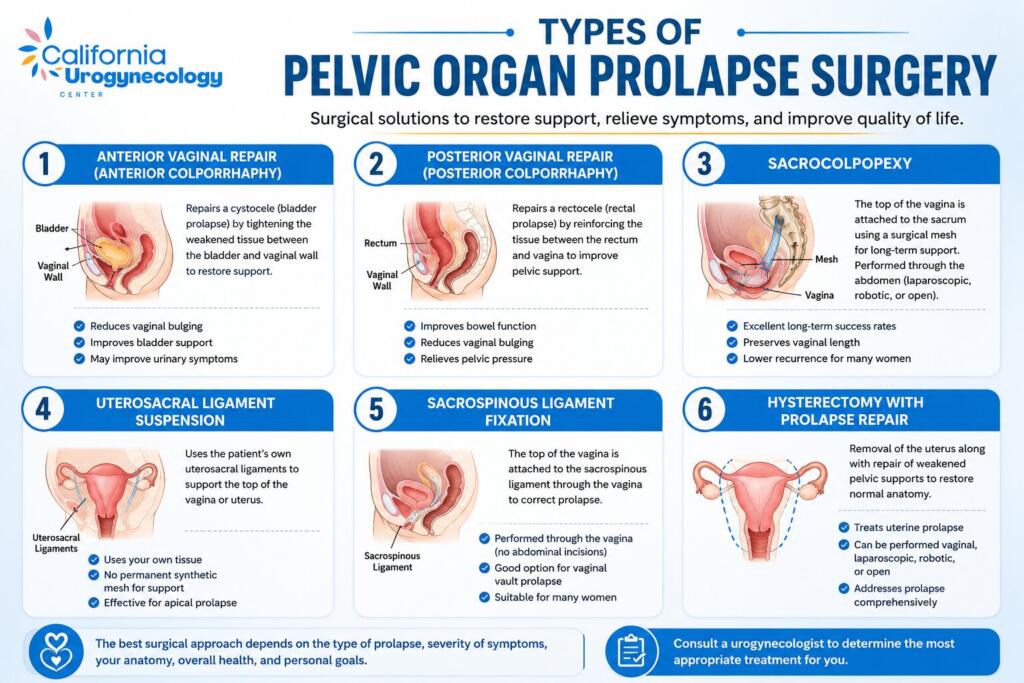
1. Anterior Vaginal Repair (Anterior Colporrhaphy)
Anterior vaginal repair treats a cystocele, also known as bladder prolapse.
During the procedure, the surgeon tightens the weakened tissue between the bladder and vaginal wall to restore normal support.
Best suited for:
- Bladder prolapse
- Urinary symptoms caused by cystocele
- Mild to moderate anterior compartment prolapse
Potential benefits
- Reduces vaginal bulging
- Improves bladder support
- May improve urinary symptoms
2. Posterior Vaginal Repair (Posterior Colporrhaphy)
This procedure repairs a rectocele, where the rectum bulges into the back wall of the vagina.
The surgeon reinforces the tissue separating the rectum and vagina to improve pelvic support.
Common reasons for surgery include:
- Difficulty with bowel movements
- Vaginal bulging
- Pelvic pressure
- Rectal discomfort
3. Sacrocolpopexy
Sacrocolpopexy is considered one of the most durable procedures for women with vaginal vault prolapse or advanced prolapse.
The surgeon attaches the top of the vagina to the sacrum using a surgical graft, creating long-term support.
It is often performed using:
- Robotic-assisted surgery
- Laparoscopic surgery
- Traditional open surgery when necessary
Advantages include:
- Excellent long-term success rates
- Preserves vaginal length
- Lower recurrence rates for selected patients
4. Uterosacral Ligament Suspension
This native tissue repair uses the patient’s own uterosacral ligaments to support the top of the vagina or uterus.
It is commonly performed during a hysterectomy or vaginal prolapse repair.
Benefits include:
- Uses your own tissue
- No permanent synthetic mesh for support
- Effective for apical prolapse
5. Sacrospinous Ligament Fixation
This procedure attaches the top of the vagina to the sacrospinous ligament inside the pelvis.
It is performed through the vagina without abdominal incisions.
This option is commonly chosen for:
- Vaginal vault prolapse
- Women seeking a vaginal surgical approach
- Patients who may not be candidates for abdominal surgery
6. Hysterectomy With Prolapse Repair
Some women with uterine prolapse may require removal of the uterus along with reconstruction of the pelvic support structures.
However, not every woman with uterine prolapse needs a hysterectomy. In many cases, uterine-preserving procedures are also available.
The decision depends on:
- Severity of prolapse
- Uterine health
- Personal preferences
- Future fertility considerations
Comparison of Common Pelvic Organ Prolapse Surgery Options
| Procedure | Treats | Surgical Approach | Preserves Uterus |
|---|---|---|---|
| Anterior Colporrhaphy | Bladder prolapse | Vaginal | Yes |
| Posterior Colporrhaphy | Rectocele | Vaginal | Yes |
| Sacrocolpopexy | Vaginal vault or advanced prolapse | Laparoscopic, robotic, or open | Usually after hysterectomy, though uterine-sparing variations exist |
| Uterosacral Ligament Suspension | Apical prolapse | Vaginal | Sometimes |
| Sacrospinous Ligament Fixation | Vaginal vault prolapse | Vaginal | Sometimes |
| Hysterectomy with Repair | Uterine prolapse | Vaginal, laparoscopic, robotic, or open | No |
Which Surgery Is Best?
There is no universal “best” procedure.
The ideal female pelvic organ prolapse surgery depends on several factors:
- Type of prolapse
- Severity of symptoms
- Age
- Overall health
- Previous pelvic surgeries
- Sexual activity
- Desire to preserve the uterus
- Lifestyle goals
A comprehensive evaluation by a urogynecologist helps determine the most appropriate treatment plan.
What Is Recovery From Pelvic Organ Prolapse Surgery Like?
Recovery from pelvic organ prolapse surgery varies depending on the procedure performed and individual healing.
General recovery timeline
| Recovery Stage | What to Expect |
|---|---|
| First few days | Mild discomfort, walking encouraged |
| 2 to 6 weeks | Gradual increase in activity |
| Around 6 weeks | Follow-up examination |
| 6 to 12 weeks | Most patients resume normal activities with physician approval |
Recovery tips
- Avoid heavy lifting
- Prevent constipation
- Follow activity restrictions
- Attend follow-up appointments
- Complete pelvic floor rehabilitation if recommended
Healing continues for several months even after you begin feeling better.
What Are the Benefits of Pelvic Organ Prolapse Surgery?
For appropriately selected patients, surgery may provide:
- Relief from pelvic pressure
- Improved bladder function
- Better bowel function
- Improved comfort during daily activities
- Increased confidence
- Enhanced quality of life
- Better pelvic support
Many women report significant improvement in symptoms after successful Pelvic Organ Prolapse Surgery, especially when combined with healthy lifestyle habits and follow-up care.
Read More: Signs You May Need Pelvic Organ Prolapse Surgery
Are There Risks?
Every surgical procedure carries potential risks.
Possible complications include:
- Bleeding
- Infection
- Blood clots
- Temporary bladder problems
- Pain during healing
- Recurrence of prolapse over time
- Injury to nearby organs, although uncommon
An experienced urogynecologist will discuss the benefits and risks based on your individual medical history.
Can Pelvic Organ Prolapse Return After Surgery?
Yes. Although surgery repairs existing prolapse, it cannot completely prevent future weakening of pelvic tissues.
Factors that may increase recurrence include:
- Aging
- Chronic constipation
- Obesity
- Chronic coughing
- Heavy lifting
- Connective tissue disorders
Maintaining pelvic floor strength and following postoperative recommendations can help support long-term results.
How to Prepare for Pelvic Organ Prolapse Surgery
Before surgery, your specialist may recommend:
Medical evaluation
- Pelvic examination
- Medical history review
- Bladder function testing when appropriate
- Imaging in selected cases
Lifestyle preparation
- Stop smoking if applicable
- Maintain a healthy weight
- Treat constipation
- Strengthen pelvic floor muscles if advised
- Arrange support during recovery
Proper preparation often contributes to smoother healing and better surgical outcomes.
Key Takeaways
- Pelvic Organ Prolapse Surgery is recommended when prolapse symptoms significantly affect quality of life or conservative treatments are no longer effective.
- Several procedures are available, including anterior and posterior vaginal repairs, sacrocolpopexy, uterosacral ligament suspension, sacrospinous ligament fixation, and hysterectomy with prolapse repair.
- The best treatment depends on the type of prolapse, your health, lifestyle, and personal goals.
- Most women experience meaningful symptom improvement, but successful outcomes also depend on following postoperative care instructions and protecting pelvic floor health over time.
FAQs
What is the most successful pelvic organ prolapse surgery?
Sacrocolpopexy is often considered one of the most durable procedures for vaginal vault prolapse, but the most appropriate surgery depends on the type of prolapse and individual patient factors.
How long does recovery from pelvic organ prolapse surgery take?
Most women resume many normal activities within 6 to 8 weeks, although complete healing may take several months depending on the procedure performed.
Is pelvic organ prolapse surgery painful?
Some discomfort is expected after surgery, but pain is typically managed with medication, and most patients notice gradual improvement during recovery.
Can pelvic organ prolapse come back after surgery?
Yes. Although surgery provides excellent symptom relief for many women, recurrence is possible due to aging, tissue weakness, or ongoing strain on the pelvic floor.
Is surgery the only treatment for pelvic organ prolapse?
No. Many women benefit from pelvic floor physical therapy, lifestyle changes, and pessary devices before considering surgery. Treatment depends on symptom severity, overall health, and personal preferences.
Restore Comfort with Expert Pelvic Prolapse Care
If pelvic organ prolapse is affecting your comfort, confidence, or daily activities, an individualized evaluation can help determine whether conservative treatment or Pelvic Organ Prolapse Surgery is the right option. At California Urogynecology Center, Dr. Bilal Kaaki provides comprehensive evaluations and personalized treatment plans using the latest evidence-based approaches to help women achieve lasting symptom relief and improved pelvic health.