
Undergoing prolapse surgery can be an important step toward relieving pelvic pressure, vaginal bulging, bladder problems, and other symptoms that interfere with everyday life. However, many women have questions about what happens once the procedure is over: How much pain is normal? When can you return to work or exercise? What changes should you expect with urination and bowel movements?
Recovery after Pelvic Organ Prolapse Surgery varies depending on the type of repair, surgical approach, overall health, and individual healing process. Knowing what to expect can make recovery less stressful and help you recognize when you may need to contact your healthcare provider.
What Happens Immediately After Prolapse Surgery?
Immediately after surgery, you will be monitored as you recover from anesthesia. Depending on the procedure and your individual circumstances, prolapse surgery may be performed as an outpatient procedure or may require a hospital stay.
You may experience:
- Pelvic soreness or pressure
- Fatigue or weakness
- Mild vaginal bleeding or discharge
- Temporary urinary changes
- Constipation or changes in bowel movements
- Discomfort when sitting, walking, or changing positions
Your healthcare team may provide medications for pain, instructions for caring for the surgical area, and guidance about activity restrictions.
A temporary urinary catheter may also be used, particularly if swelling around the bladder or urethra makes urination difficult immediately after surgery.
The First Few Days After Surgery
The first several days are generally focused on rest, hydration, gentle movement, and following your surgeon’s instructions.
It is common to feel tired even if the procedure itself went well. Your body needs energy to repair tissues and recover from anesthesia.
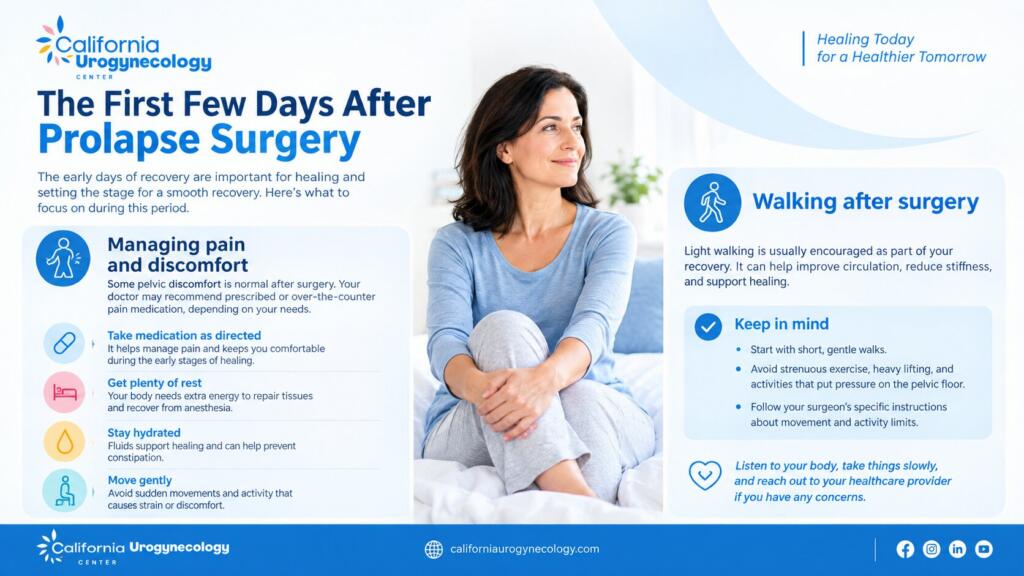
Managing pain and discomfort
Some pelvic discomfort is expected. Your doctor may recommend prescribed or over-the-counter pain medication, depending on your medical history and the procedure performed.
Using medications exactly as directed and getting adequate rest can make the early recovery period more comfortable.
Walking after surgery
Light walking is usually encouraged as part of recovery. Gentle movement can help maintain circulation and gradually restore strength.
However, strenuous exercise, heavy lifting, and activities that place significant pressure on the pelvic floor should generally be avoided until your surgeon says they are safe.
What to Expect During the First Few Weeks
Recovery is gradual. You may feel noticeably better after the first week, but that does not necessarily mean the pelvic tissues have completely healed.
During this period, you may notice improvements in the symptoms that led you to surgery, including:
- Less pelvic pressure
- Reduced vaginal bulging
- Improved ability to empty the bladder
- Fewer difficulties with bowel movements
- Greater comfort during daily activities
Some urinary symptoms can temporarily change during healing. For example, swelling may cause difficulty emptying the bladder or create changes in urinary frequency or urgency.
If urinary symptoms persist or become worse, tell your healthcare provider.
For a deeper understanding of potential postoperative issues, you can read our guide on risks and complications of prolapse surgery.
When Can You Return to Normal Activities?
There is no single recovery timeline that applies to every woman.
Your return to normal activities depends on the type of Pelvic Organ Prolapse Surgery you had and how your body is healing. Your surgeon will provide individualized instructions.
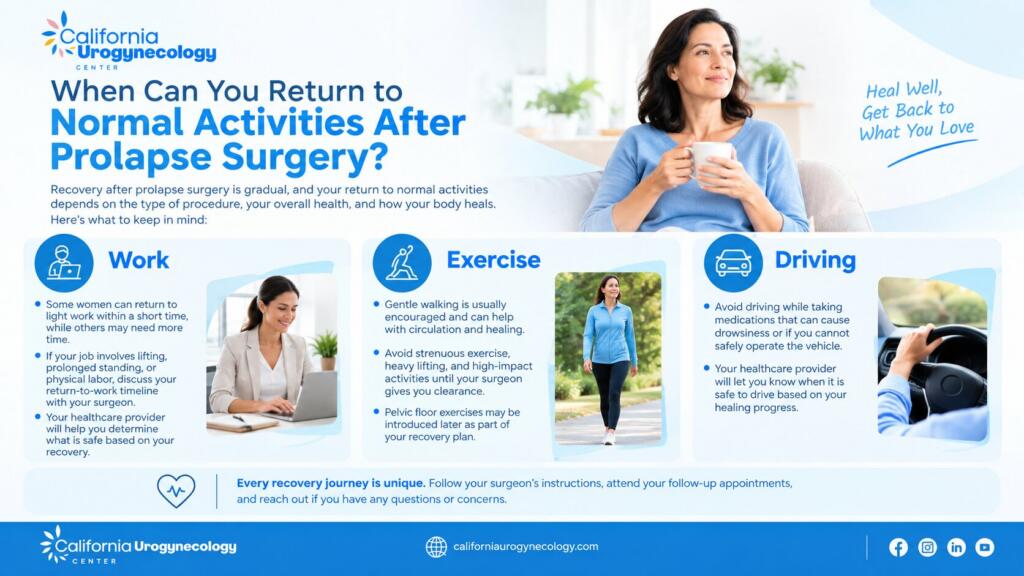
Work
Some women can return to light work relatively quickly, while others may need more time, particularly after more extensive reconstructive surgery or physically demanding work.
If your job involves lifting, prolonged standing, strenuous activity, or physical labor, discuss your expected return-to-work timeline with your surgeon.
Exercise
Gentle walking is generally part of recovery, but strenuous workouts should wait until you receive medical clearance.
Activities involving heavy lifting or significant abdominal and pelvic pressure may be restricted during the healing period.
Driving
You should not drive while taking medications that impair alertness or if you cannot comfortably and safely operate the vehicle. Your healthcare provider can advise you when driving is appropriate based on your recovery.
What About Sex After Prolapse Surgery?
Sexual activity is usually restricted during the initial healing period to allow the vaginal tissues and surgical repairs to recover.
Your surgeon will tell you when it is safe to resume intercourse. The timing depends on the type of procedure and your individual healing.
Some women experience improved sexual comfort after prolapse symptoms are treated. Others may temporarily experience tenderness, dryness, or discomfort during healing.
If pain during intercourse continues after you have recovered, discuss it with your urogynecologist. Treatment may be available depending on the underlying cause.
How Can You Support a Successful Recovery?
Following postoperative instructions is one of the most important things you can do after prolapse surgery.
Helpful recovery habits may include:
Prevent constipation
Straining during bowel movements can place additional pressure on healing pelvic tissues. Drink adequate fluids, eat fiber-rich foods, and follow your healthcare provider’s recommendations for preventing constipation.
Avoid heavy lifting
Lifting heavy objects too soon can increase pressure on the pelvic floor. Follow your surgeon’s specific restrictions regarding lifting and physical activity.
Keep follow-up appointments
Postoperative appointments allow your provider to evaluate healing, address symptoms, and determine when it is appropriate to increase your activity.
Follow pelvic floor rehabilitation recommendations
Some women may benefit from pelvic floor therapy after healing. However, pelvic floor exercises should be introduced at the appropriate stage of recovery and according to professional guidance.
Warning Signs to Watch For After Surgery
Although some discomfort and fatigue are expected, certain symptoms should be reported promptly.
Contact your healthcare provider if you experience:
- Fever or chills
- Heavy or increasing vaginal bleeding
- Severe or worsening pelvic pain
- Foul-smelling vaginal discharge
- Difficulty urinating
- Increasing redness or swelling
- A new or worsening vaginal bulge
- Persistent vomiting or inability to keep fluids down
Chest pain, severe shortness of breath, or other emergency symptoms require immediate medical attention.
Can Prolapse Come Back After Surgery?
Surgery can restore pelvic support, but it cannot completely eliminate the possibility of future prolapse.
Recurrence may be influenced by factors such as tissue strength, aging, chronic constipation, chronic coughing, obesity, heavy lifting, and other conditions that increase pressure on the pelvic floor.
A recurrence does not necessarily mean the original operation was unsuccessful. Prolapse can sometimes develop in another part of the pelvic support system.
Understanding the different surgical approaches can also help patients make informed decisions. Our guide to types of Pelvic Organ Prolapse Surgery explains procedures such as anterior vaginal repair, posterior repair, sacrocolpopexy, and other surgical options.
When Should You Follow Up With a Urogynecologist?
Follow-up care is an important part of recovery. Your provider can determine whether your healing is progressing normally and address concerns involving bladder function, bowel movements, pelvic discomfort, or sexual health.
If you are considering surgery or recovering from a recent procedure, learning about Pelvic Organ Prolapse Treatment in Riverside can help you understand available treatment and follow-up options.
Frequently Asked Questions
How long does it take to recover from prolapse surgery?
Recovery varies according to the procedure and individual health. Many women gradually resume normal activities over several weeks, but complete tissue healing can take longer.
Is bleeding normal after prolapse surgery?
Light vaginal bleeding or discharge can occur during recovery. Heavy, increasing, or persistent bleeding should be reported to your healthcare provider.
Can I walk after prolapse surgery?
Gentle walking is commonly encouraged during recovery, but strenuous exercise and heavy lifting should be avoided until your surgeon provides clearance.
When can I have sex after prolapse surgery?
Sexual intercourse is generally restricted during the initial healing period. Your surgeon will tell you when it is safe based on your procedure and recovery.
Can pelvic organ prolapse return after surgery?
Yes. Although surgery restores pelvic support, recurrence is possible. Long-term pelvic health, appropriate activity, and management of factors such as constipation can support recovery and overall pelvic floor health.
Take the Next Step Toward Better Pelvic Health
Recovery after Pelvic Organ Prolapse Surgery is a gradual process, and having clear expectations can help you feel more confident throughout each stage. With appropriate follow-up and adherence to postoperative instructions, many women are able to return to their normal routines and experience meaningful improvement in prolapse-related symptoms.
If you are experiencing pelvic pressure, vaginal bulging, bladder symptoms, bowel difficulties, or concerns about prolapse treatment, California Urogynecology Center, led by Dr. Bilal Kaaki, provides specialized pelvic health care in Riverside, CA. A personalized evaluation can help determine whether conservative treatment, pelvic floor therapy, or surgery is appropriate for your needs.