
Mitral valve prolapse (MVP) is a common heart valve condition, and one of the most frequent questions people ask is whether it worsens over time. The short answer is: not always. In many cases, MVP remains stable and does not lead to serious complications. However, for some individuals, it can gradually progress with age.
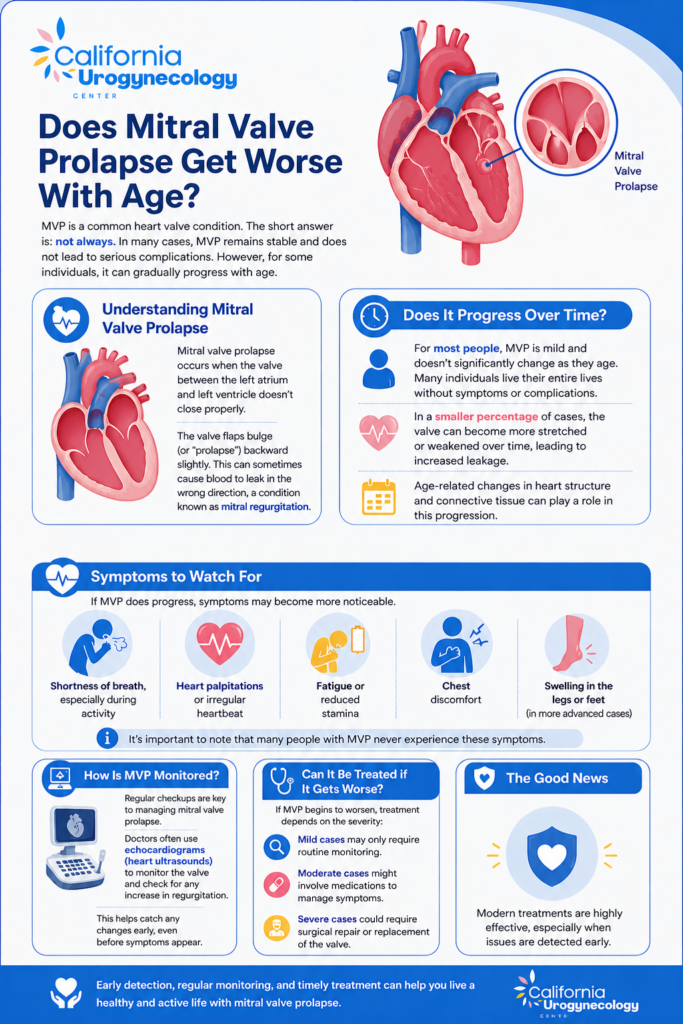
Understanding Mitral Valve Prolapse
Mitral valve prolapse occurs when the valve between the left atrium and left ventricle doesn’t close properly. Instead of sealing tightly, the valve flaps bulge (or “prolapse”) backward slightly. This can sometimes cause blood to leak in the wrong direction, a condition known as mitral regurgitation.
Does It Progress Over Time?
For most people, MVP is mild and doesn’t significantly change as they age. Many individuals live their entire lives without symptoms or complications. However, in a smaller percentage of cases, the valve can become more stretched or weakened over time, leading to increased leakage.
Age-related changes in heart structure and connective tissue can play a role in this progression. When MVP worsens, it is usually due to the development or increase of mitral regurgitation rather than the prolapse itself.
Related: Can a prolapse be a sign of cancer?
Symptoms to Watch For
If MVP does progress, symptoms may become more noticeable. These can include:
- Shortness of breath, especially during activity
- Heart palpitations or irregular heartbeat
- Fatigue or reduced stamina
- Chest discomfort
- Swelling in the legs or feet (in more advanced cases)
It’s important to note that many people with MVP never experience these symptoms.
How Is MVP Monitored?
Regular checkups are key to managing mitral valve prolapse. Doctors often use echocardiograms (heart ultrasounds) to monitor the valve and check for any increase in regurgitation. This helps catch any changes early, even before symptoms appear.
Can It Be Treated if It Gets Worse?
If MVP begins to worsen, treatment depends on the severity:
- Mild cases may only require routine monitoring
- Moderate cases might involve medications to manage symptoms
- Severe cases could require surgical repair or replacement of the valve
The good news is that modern treatments are highly effective, especially when issues are detected early.
The Bottom Line
Mitral valve prolapse does not automatically get worse with age. While some people may experience progression, most cases remain stable and manageable. With regular monitoring and proper care, individuals with MVP can lead normal, healthy lives.
A Note from California Urogynecology Center
Mitral valve prolapse (MVP) is often a manageable condition, but if it progresses to mitral regurgitation, timely evaluation and treatment become important. Understanding your options and working with experienced heart specialists can make a significant difference in your long-term health.
If you’re experiencing symptoms or have been diagnosed with MVP, it’s important to seek care from a trusted cardiovascular provider. Clinics with expertise in heart valve conditions can offer accurate diagnosis, ongoing monitoring, and advanced treatment options tailored to your needs.
California Urogynecology Center provides specialized care and treatment support in Riverside, helping patients manage their condition with confidence and personalized care plans.
Schedule a consultation today in Riverside, CA, and take the next step toward better health and peace of mind.
Read More: How to Tell If You Have a Rectal Prolapse?