
A prolapsed rectum can feel alarming the first time it happens. One moment you’re going about your day, and the next, you notice tissue protruding from your anus, often after a bowel movement, a cough, or even just standing up. While the experience is unsettling, the good news is that rectal prolapse is a well-understood medical condition with clear causes and effective treatments.
This guide breaks down exactly what causes a prolapsed rectum, who’s most at risk, and what you can do about it, drawing on insights from colorectal medicine and the latest clinical guidance.
What Is a Prolapsed Rectum?
A prolapsed rectum, medically known as rectal prolapse, occurs when part or all of the rectum slips out of its normal position and protrudes through the anus. The rectum is the final section of the large intestine, and when its supporting muscles and ligaments weaken, gravity and pressure can push it downward and outward.
Rectal prolapse is generally categorized into three types:
| Type | Description | Visibility |
|---|---|---|
| Internal (occult) prolapse | Rectum folds inside itself but doesn’t exit the anus | Not visible externally |
| Partial (mucosal) prolapse | Only the inner lining of the rectum protrudes | Slight tissue visible |
| Complete (full-thickness) prolapse | The entire rectal wall extends outside the anus | Clearly visible |
Understanding which type you may have matters, because the underlying causes and treatment paths can differ significantly.
Read More: Can a prolapse be a sign of cancer?
The Primary Causes of a Prolapsed Rectum
Rectal prolapse rarely has a single cause. In most cases, it develops gradually as several factors combine to weaken the pelvic support structures. Below are the main contributors.
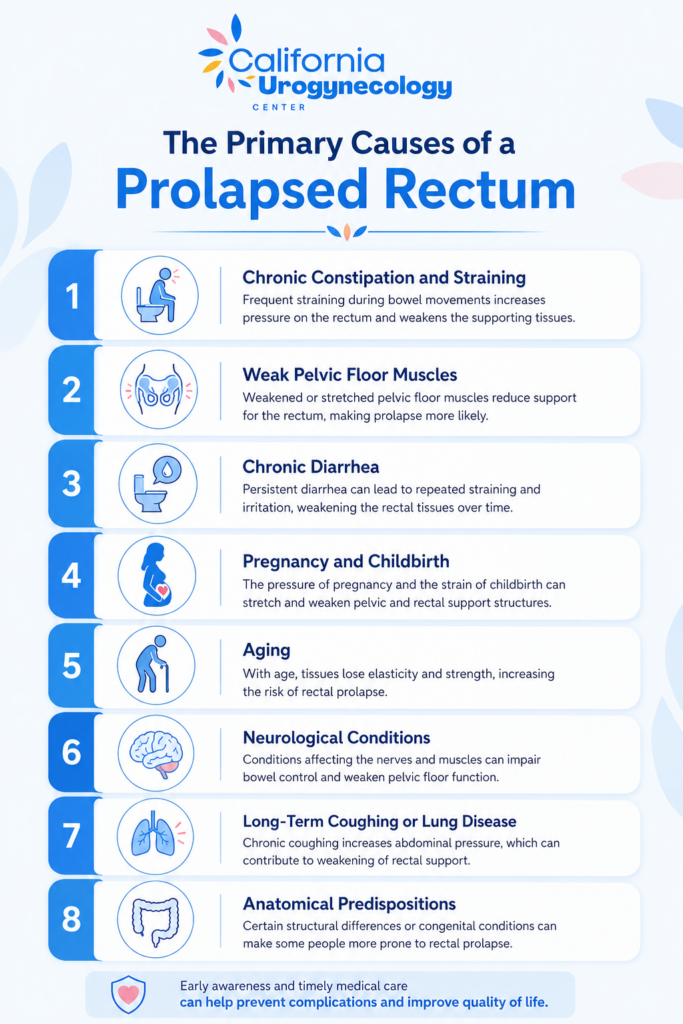
1. Chronic Constipation and Straining
This is the single most common cause. When you strain repeatedly during bowel movements, you place sustained pressure on the rectum and the muscles holding it in place. Over months and years, this stretches the ligaments and weakens the pelvic floor, allowing the rectum to slip out of position.
People who deal with hard stools, infrequent bowel movements, or who spend long periods on the toilet are at significantly higher risk.
2. Weak Pelvic Floor Muscles
The pelvic floor is a hammock of muscles that supports the rectum, bladder, and (in women) the uterus. When these muscles weaken, the rectum loses its structural backup. Common reasons for pelvic floor weakness include:
- Aging and natural muscle loss
- Multiple vaginal childbirths
- Previous pelvic or rectal surgery
- Nerve damage in the lower spine or pelvis
- Long-term heavy lifting without proper technique
3. Chronic Diarrhea
While constipation is more often blamed, chronic diarrhea can be equally damaging. Frequent, urgent bowel movements irritate the rectal lining and place repeated stress on the anal sphincter and supporting tissues.
4. Pregnancy and Childbirth
Pregnancy puts significant downward pressure on the pelvic floor for months, and vaginal delivery, especially difficult or instrument-assisted births, can stretch or tear the muscles and nerves that support the rectum. This is one reason rectal prolapse is more common in women, particularly those who have had multiple children.
5. Aging
After age 50, the connective tissues throughout the body naturally lose elasticity, and the pelvic floor is no exception. Most adults diagnosed with complete rectal prolapse are over 50, with women in their 60s and 70s being the most commonly affected group.
6. Neurological Conditions
Conditions that affect the nerves controlling the pelvic muscles can lead to prolapse. These include:
- Multiple sclerosis
- Spinal cord injuries
- Stroke
- Diabetic neuropathy
- Cauda equina syndrome
When nerve signals weaken, the muscles supporting the rectum can’t contract properly, and prolapse becomes more likely.
7. Long-Term Coughing or Lung Disease
Chronic conditions like COPD, asthma, or persistent smoker’s cough create repeated bursts of intra-abdominal pressure. Over years, this pressure has the same wearing effect on the pelvic floor as straining during bowel movements.
8. Anatomical Predispositions
Some people are simply born with anatomical features that make prolapse more likely. These include:
- A longer-than-average rectum
- A loose attachment of the rectum to the sacrum
- A deep pouch of Douglas (the space between the rectum and uterus or bladder)
- Weak anal sphincter muscles
Read More: How to Tell If You Have a Rectal Prolapse?
Risk Factors That Increase Your Chances
Even if you don’t have a direct cause, certain factors raise your overall risk:
- Female sex, especially after menopause
- Age over 50
- History of pelvic surgery (including hysterectomy)
- Cystic fibrosis (particularly in children)
- Long-term laxative misuse
- Eating disorders involving repeated straining or purging
- Family history of pelvic floor disorders
It’s worth noting that rectal prolapse in children is usually caused by different factors, primarily cystic fibrosis, malnutrition, or severe constipation, and often resolves with treatment of the underlying condition.
How to Recognize the Symptoms Early
Catching prolapse early can prevent it from worsening. Watch for:
- A bulge or feeling of tissue protruding from the anus
- A sensation of incomplete bowel emptying
- Mucus or blood discharge from the anus
- Fecal incontinence (leakage)
- Constipation that feels different or worse than before
- Discomfort or a dragging sensation in the rectal area
In early stages, the prolapse may slide back in on its own. As the condition progresses, you may need to manually push it back, and eventually it can remain prolapsed continuously.
Can a Prolapsed Rectum Be Prevented?
While you can’t eliminate every risk factor, you can significantly reduce your chances by addressing the modifiable causes:
Manage bowel habits. Aim for soft, easy-to-pass stools. A daily fiber intake of 25–35 grams, adequate water (around 2 liters), and not ignoring the urge to go are foundational.
Avoid straining. If a bowel movement isn’t happening within a few minutes, get up and try again later rather than pushing harder.
Strengthen your pelvic floor. Kegel exercises, when done correctly, build the muscles that hold your rectum in place. A pelvic floor physiotherapist can teach proper technique.
Treat chronic coughs. If you have a persistent cough, address it medically rather than letting it linger for months.
Lift smart. Use your legs, not your abdomen, and exhale during the effort to avoid spiking abdominal pressure.
Maintain a healthy weight. Excess abdominal weight places constant downward pressure on the pelvic floor.
When to See a Doctor
You should consult a healthcare provider promptly if you notice any tissue protruding from your anus, especially if it doesn’t retract on its own, if you have bleeding, or if you’re experiencing new incontinence. Rectal prolapse rarely improves without treatment, and early intervention typically means simpler, more effective solutions.
In rare cases, a prolapse can become incarcerated (trapped outside) and lose blood supply. This is a medical emergency requiring immediate care.
Treatment Options at a Glance
| Treatment | Best For | What It Involves |
|---|---|---|
| Dietary and lifestyle changes | Mild or early-stage prolapse | Fiber, hydration, bowel retraining |
| Pelvic floor physiotherapy | Partial prolapse, post-childbirth weakness | Targeted muscle strengthening |
| Biofeedback therapy | Coordination issues with bowel movements | Sensor-guided muscle training |
| Surgery (abdominal or perineal approach) | Complete or recurrent prolapse | Rectopexy, resection, or perineal procedures |
Surgery is the only definitive cure for complete rectal prolapse, but many people manage partial or early prolapse successfully with conservative measures.
FAQs:
Is a prolapsed rectum the same as hemorrhoids?
No. Hemorrhoids are swollen blood vessels in or around the anus, while rectal prolapse involves the rectum itself slipping out of position. They can look similar at first glance, but a doctor can easily distinguish them through a physical exam.
Can a prolapsed rectum heal on its own?
A mild, partial prolapse may improve with lifestyle changes, but a complete prolapse will not resolve without medical treatment. Ignoring it usually leads to worsening symptoms over time.
Does rectal prolapse only affect older women?
No. While it’s most common in women over 50, men, younger adults, and even children can develop rectal prolapse. The causes simply differ across age groups and sexes.
Is rectal prolapse surgery dangerous?
Modern rectal prolapse surgery is generally safe and highly effective, with success rates typically above 80–90%. Your surgeon will recommend either an abdominal or perineal approach based on your age, overall health, and the type of prolapse.
Can exercise cause rectal prolapse?
Heavy lifting with poor technique or activities that involve repeated straining (like powerlifting without breath control) can contribute over time, especially if you already have a weakened pelvic floor. Moderate exercise, by contrast, is protective.
How long does recovery take after rectal prolapse surgery?
Most people return to light activities within 2–3 weeks, with full recovery usually around 6–8 weeks. Recovery time depends on the surgical approach and your overall health.
Summary
Rectal prolapse is commonly caused by weakened pelvic muscles, chronic straining, aging, childbirth, or conditions that place repeated pressure on the rectum. Although the condition can feel uncomfortable or embarrassing, effective treatments are available.
Recognizing symptoms early and seeking medical care can help prevent complications and improve long-term bowel health.
If you’re noticing symptoms of rectal prolapse or struggling with related pelvic floor issues, you don’t have to navigate it alone. The team at California Urogynecology Center in Riverside, CA specializes in diagnosing and treating pelvic floor disorders, including rectal prolapse, with a compassionate, patient-first approach.
Whether you’re exploring non-surgical options like pelvic floor therapy or considering advanced surgical solutions, our experienced specialists will walk you through every step, helping you understand your condition and choose the treatment that fits your life.
Don’t let discomfort or embarrassment hold you back from getting the care you deserve. Many of the conditions we treat are far more common than people realize, and effective help is available.
Schedule your consultation today with California Urogynecology Center in Riverside, CA, and take the first step toward lasting relief and renewed confidence.